

Publication of the public relations magazine Obayashi Quarterly No. 65, "The Earth": Creating Habitable Terrain on Mars: Crater Paraterraforming
-
Others
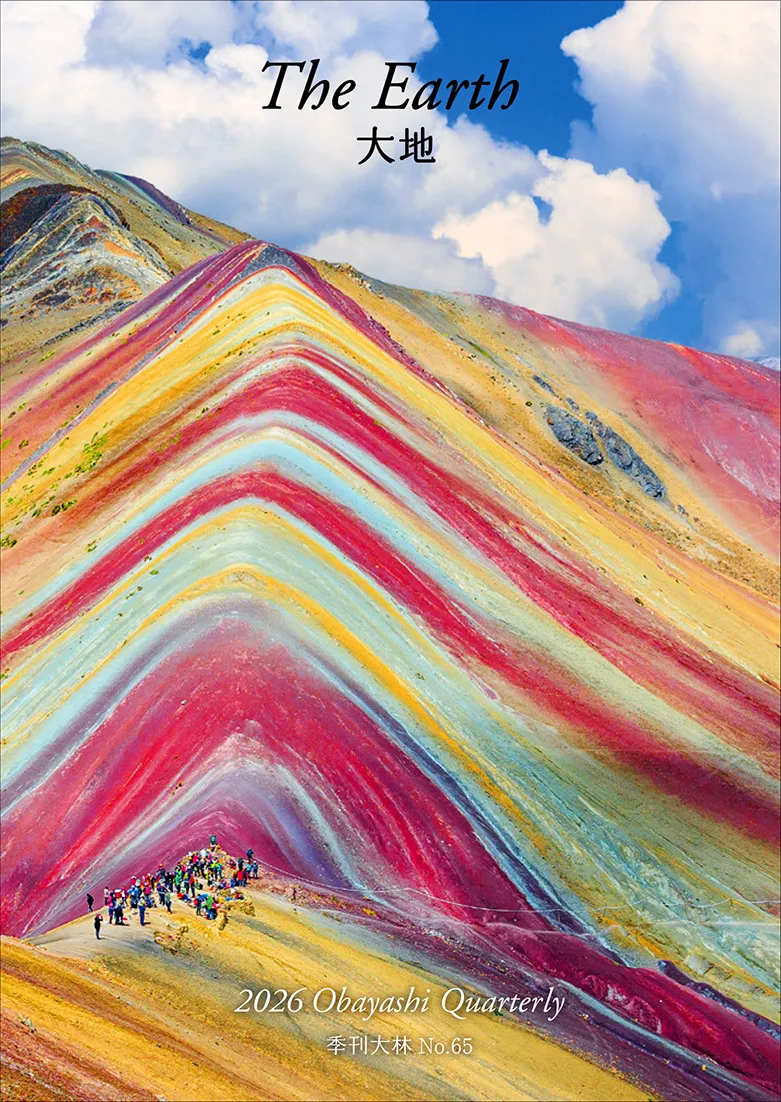
OBAYASHI CORPORATION (Headquarters: Minato-ku, Tokyo; President: SATO Toshimi) has published the 65th issue of its public relations magazine Obayashi Quarterly entitled "The Earth."
Since its first issue published in 1978, Obayashi Quarterly has been examining what we humans have built in the past, and what we can build in the future, taking the times and cultures into consideration.
This issue focuses on the earth itself, exploring the diverse and colorful landscapes found around the world and the ways in which they are intertwined with people's lives. We also trace the geological processes that have shaped these distinctive landscapes.
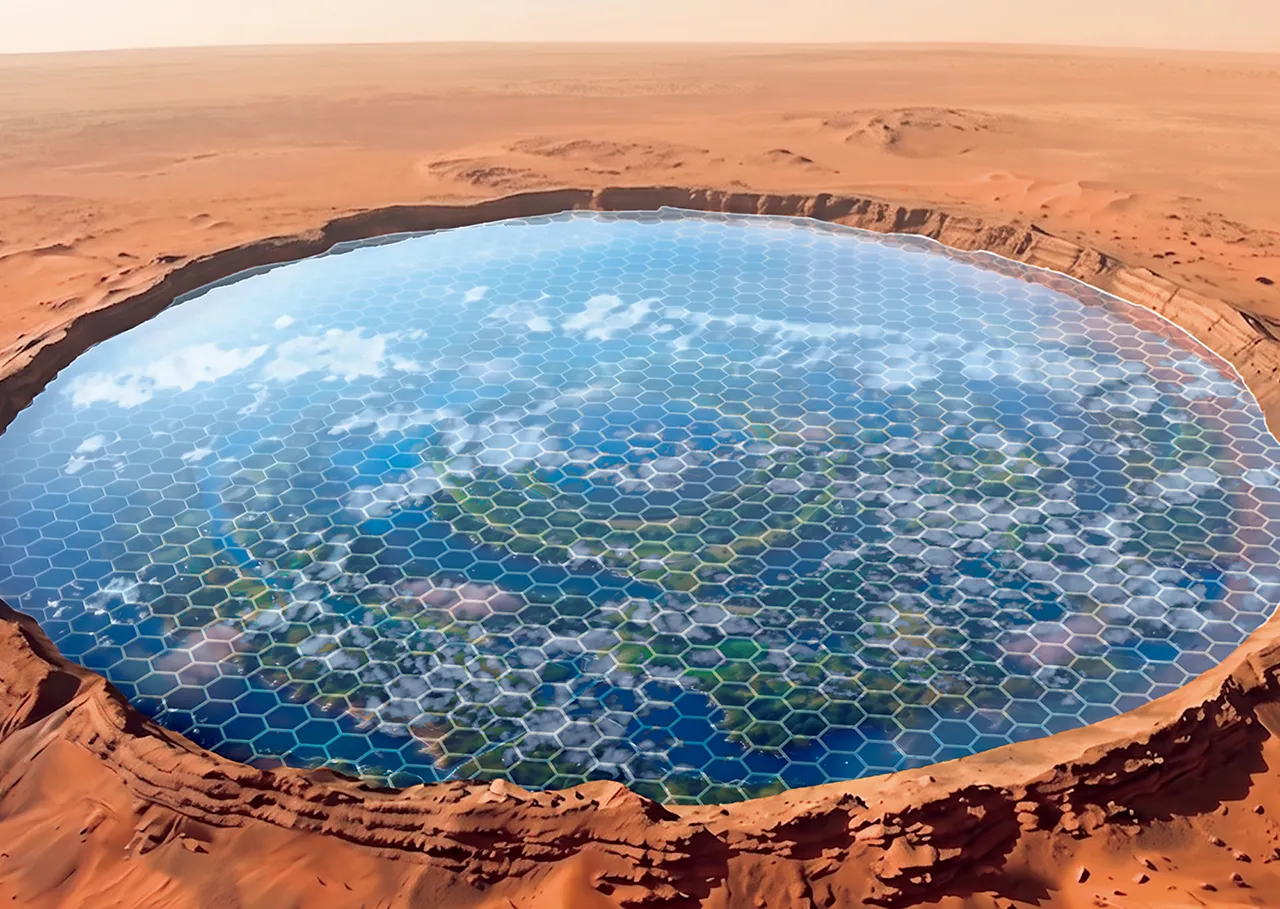
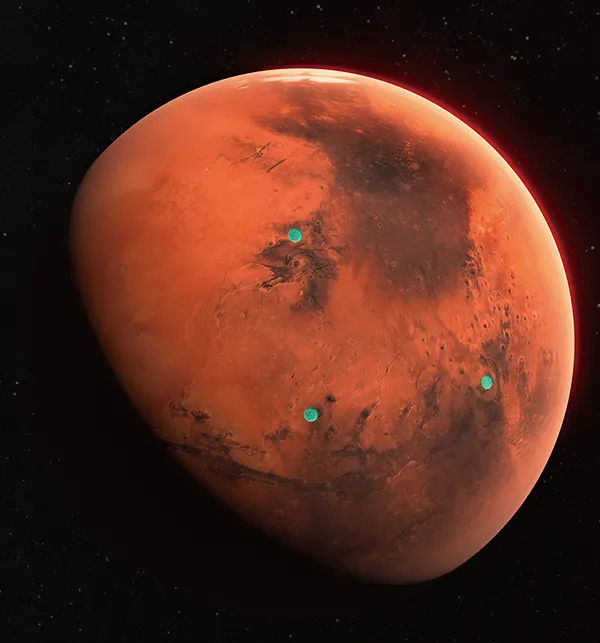
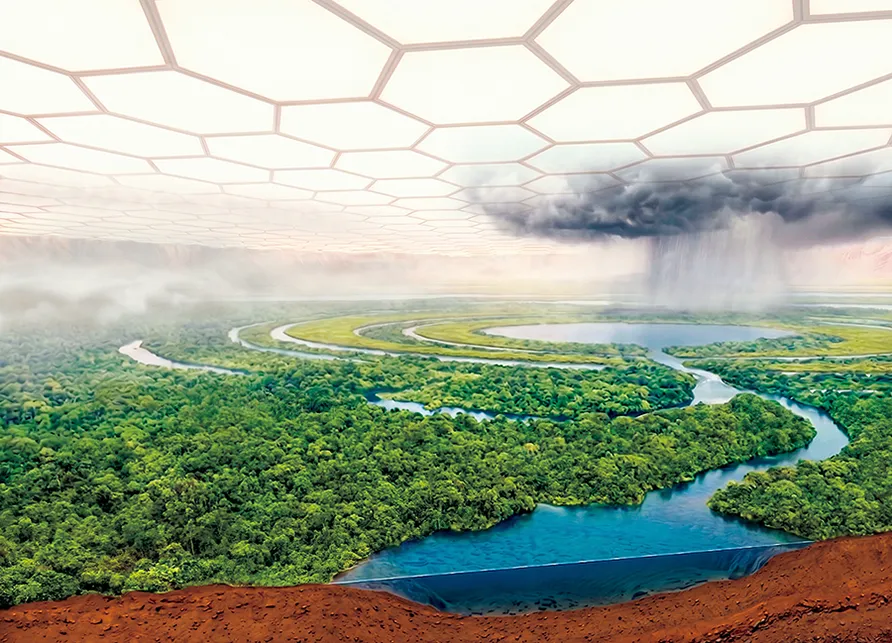
In the Obayashi Project, we took on the ambitious challenge of conceptualizing the creation of habitable terrain and the development of an environment capable of sustaining life inside a Martian crater.
OBAYASHI CORPORATION regards the publication of Obayashi Quarterly, which examines the culture related to construction, as part of its socio-cultural activities, and actively takes up important themes such as the environment, information, and disaster prevention.
About Obayashi Quarterly and "Obayashi Project"
From the first issue featuring "Pyramid" published in 1978 to the present, Obayashi Quarterly aims to be a public relations magazine that examines the civilization and culture mankind has built through the perspective of construction, while exploring the future society. During that time, many researchers and experts from in and outside of Japan have contributed, making the magazine a highly acclaimed public relations journal that is academic and unparalleled.
The most pronounced of Obayashi Quarterly is the article "Obayashi Project," where the project team takes on the challenges of restoring and assessing historical buildings, and planning buildings and towns that will contribute to the future society. The article presents the processes and results of the projects.
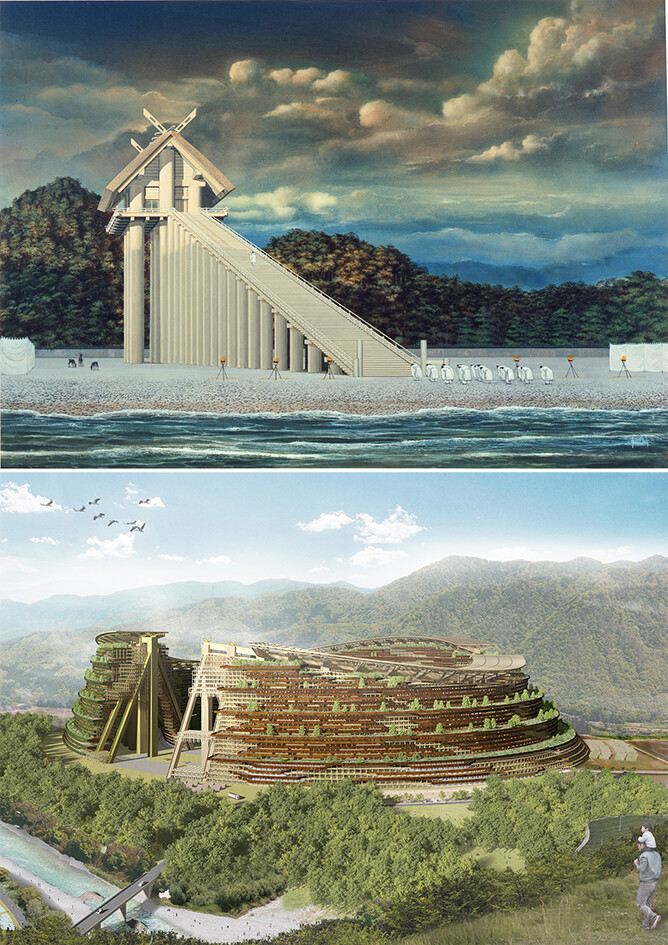
Examples of restoration projects include "The Main Shrine of Ancient Izumo Taisha," "Rokujo-in, the Residence of the Hikaru Genji (built in Shinden-zukuri style) ," "The Great Library of Ancient Alexander," "The Hall of the Great Buddha Built by Toyotomi Hideyoshi." Examples of ideas for the future are seen in the "Mars Habitat Plan," "Jelly Seismic Isolation Concept to Isolate the Entire City," "Space Elevator Construction Plan," "Smart Water City Tokyo Construction Plan," "LOOP50: City Living Together with Forests," and "COMPACT AGRICULTURE: a Recycling-based Agriculture Created with Technologies." In addition to demonstrating the high technical levels of the Obayashi Group, the articles also showed fascinating and profound aspects of construction, becoming hot topic as opportunities to deepen understanding of construction culture.

Obayashi Quarterly No. 65, "The Earth": Overview
The earth nurtures life and sustains the rich natural environments that surround us. We live each day benefiting from its blessings. How did the earth come into being? And is there land on planets beyond Earth?
This issue explores the diverse and colorful landscapes found around the world and the ways in which they are intertwined with people's lives. We also trace the geological processes that have shaped these distinctive landscapes.
In the Obayashi Project, we took on the ambitious challenge of conceptualizing the creation of habitable terrain and the development of an environment capable of sustaining life inside a Martian crater.
We reflect on the richness and significance of the natural world nurtured by the earth and turn our thoughts to the future of our planet's environment.
■Main contents
Featured Photos: The Colors and Expressions of the Earth
Across the planet, the earth reveals an astonishing variety of colors and forms, shaped by time and place.
From dramatic rock formations and cave systems to vast sand dunes and vividly colored strata, this feature presents recent photographs from around the world, alongside artworks inspired by the earth's surface and geological layers.
Earth's Soil and Planetary Soil
FUJII Kazumichi (Unit Leader, Soil Homeostasis Research Unit, Fukushima Institute for Research, Education and Innovation)
When and how did Earth's soils emerge, and how did they give rise to the green landscapes we know today?
Do soils also exist on planets beyond Earth?
Renowned for his investigations of the many different soils found on Earth and for communicating the importance of soil to a broad audience, one of Japan's leading soil scientists takes a cosmic perspective and explores how terraforming research and other areas of planetary science could contribute to the restoration of Earth's environment.
Who Owns Land in Space?: Rethinking the Ethics of Terraforming
MOTOMURA Yukiko (Visiting Professor, Faculty of Life and Medical Sciences, Doshisha University; Guest Editor, The Mainichi Newspapers Co., Ltd.)
As space development advances, outer space is becoming increasingly familiar to humanity. Yet alongside these developments lie diverse ethical challenges spanning areas such as life, resources, and the environment.
As calls for planetary settlement and the terraforming of Mars become increasingly realistic, space ethics is revisited, and the importance of protecting Earth is viewed anew from the perspective of space development.
Terraforming: Ecosynthesis and Ecological Restoration on Mars
Christopher P. McKay (Planetary Scientist; Senior Scientist, NASA Ames Research Center)
Mars is believed to have once possessed an environment much like that of Earth and may even have harbored life. What conditions would be required for ecosystems to take shape there once again? Dr. Christopher McKay, one of the leading figures in terraforming research, explains the basis for his view that Mars can be terraformed with existing science and technology, and discusses the significance of pursuing such an endeavor.
Dreams of the Red Earth: Five Hundred Years of Martian Settlement
TAKEUCHI Kaoru (Science Writer; Professor, Faculty of Social Informatics, ZEN University)
Terraforming Mars in the foreseeable future is no longer a distant fantasy. If humanity succeeds in restoring the Martian landscape and establishing permanent settlements there, how would people live, what relationship would they foster with Earth, and how would they shape their own culture? A science writer with deep expertise in space science offers a vision of humanity's future on Mars.
FUJIMORI Terunobu's "Origins of Architecture" Series No. 16: The "Earthen Houses" of Iceland
FUJIMORI Terunobu (Architectural historian and architect; Director, Tokyo Metropolitan Edo-Tokyo Museum; and Emeritus Professor, University of Tokyo)
Iceland, the land of ice located just south of the Arctic Circle. Yet even in such a harsh environment, people have taken root and sent their roots deep into the land.
The author surveys Iceland's traditional "earthen houses"—turf houses inhabited until recent times and part of a tradition stretching back over 10,000 years—together with the way of life they supported, and reflects on the coexistence of people and nature.
Obayashi Project: Creating Habitable Terrain on Mars: Crater Paraterraforming
Concept: Obayashi Project Team
Paraterraforming seeks to recreate Earth-like natural environments within limited regions of another planet.
Is it possible to create an atmosphere, establish natural cycles, generate wind and rain, and ultimately create green landscapes capable of supporting life amid the harsh Martian environment of thin air, intense radiation, and extreme cold?
The Obayashi Project Team presents a scientific and engineering assessment of how a viable natural environment might be created on Mars.
Through this process, we reflect on the almost miraculous convergence of factors that gave rise to Earth's natural environment—so often taken for granted—and its profound value as we look ahead to the future of our planet's environment.
For further press inquiries, please contact:
Public Relations Division, Corporate Communications Department,
OBAYASHI CORPORATION
Contact us