



FOCUS: Design Stories
ES CON FIELD HOKKAIDO

Building a Ballpark the World Has Never Seen Before
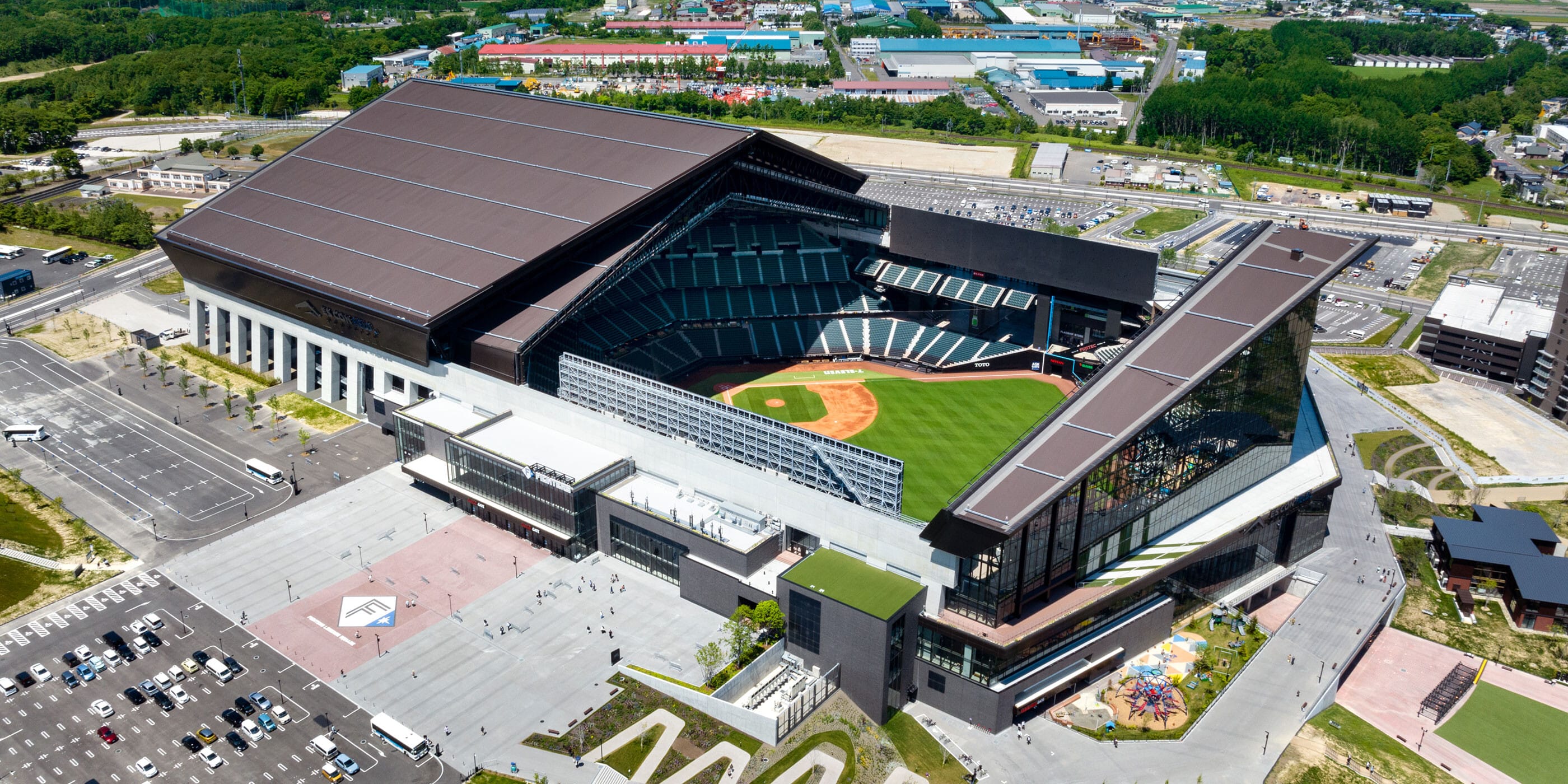
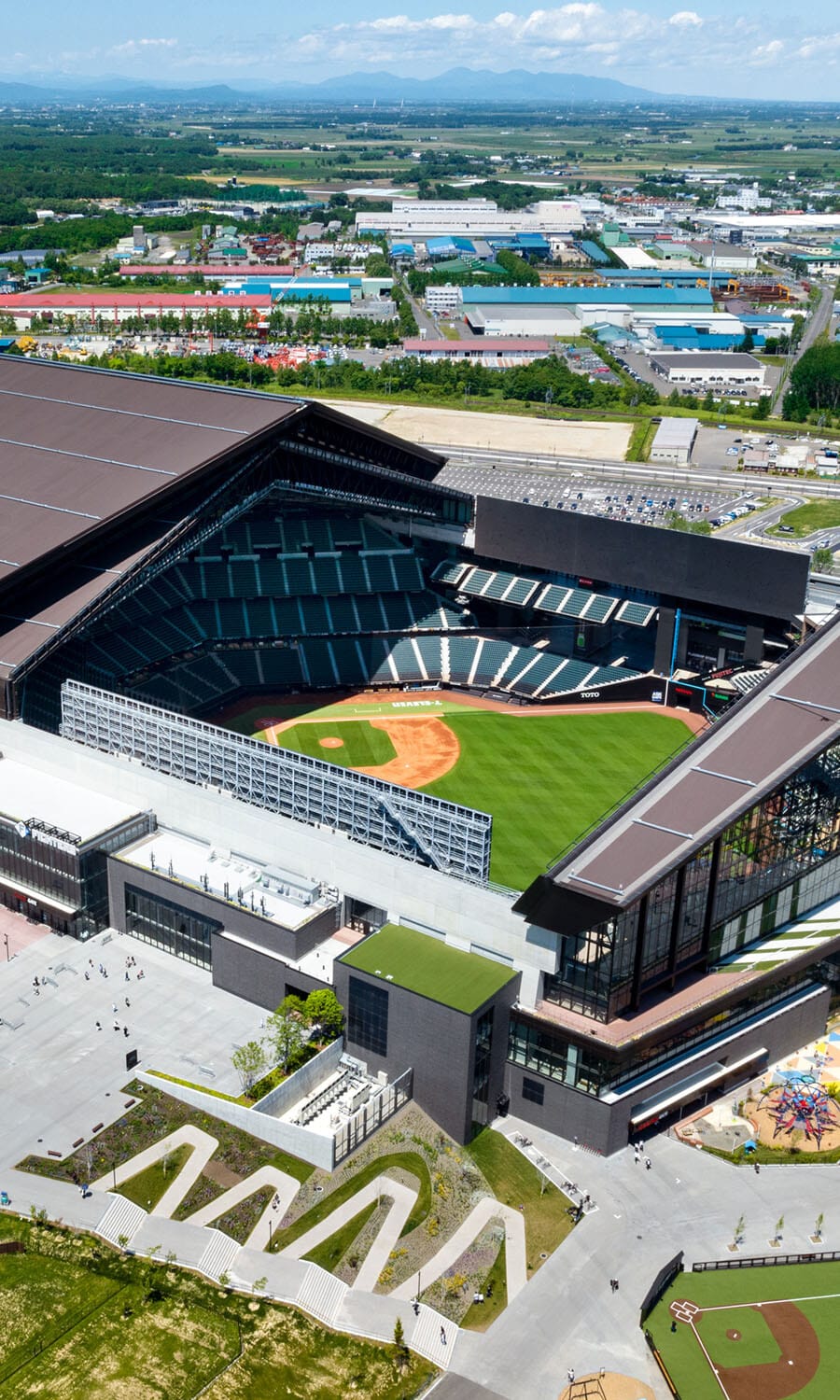
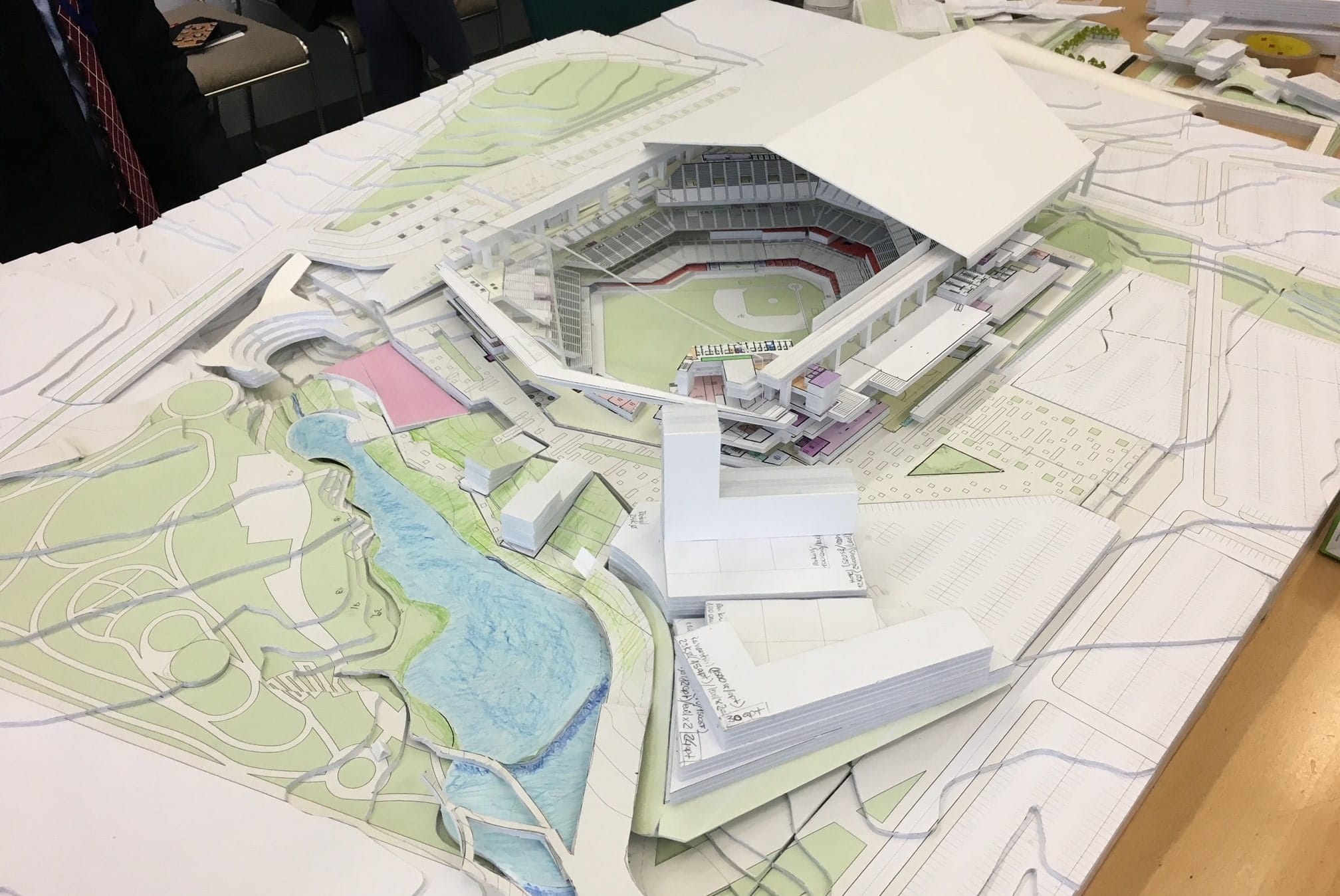
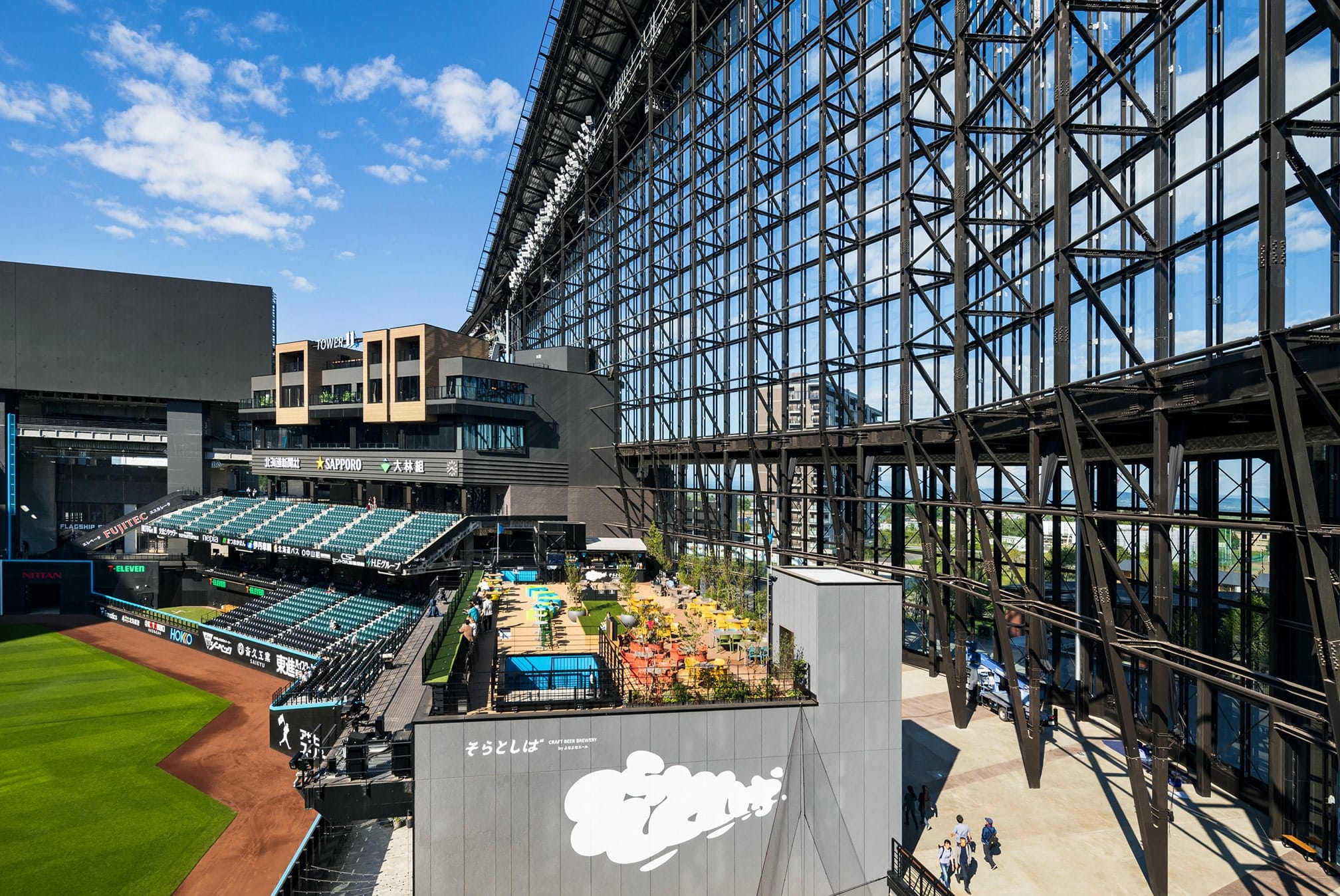
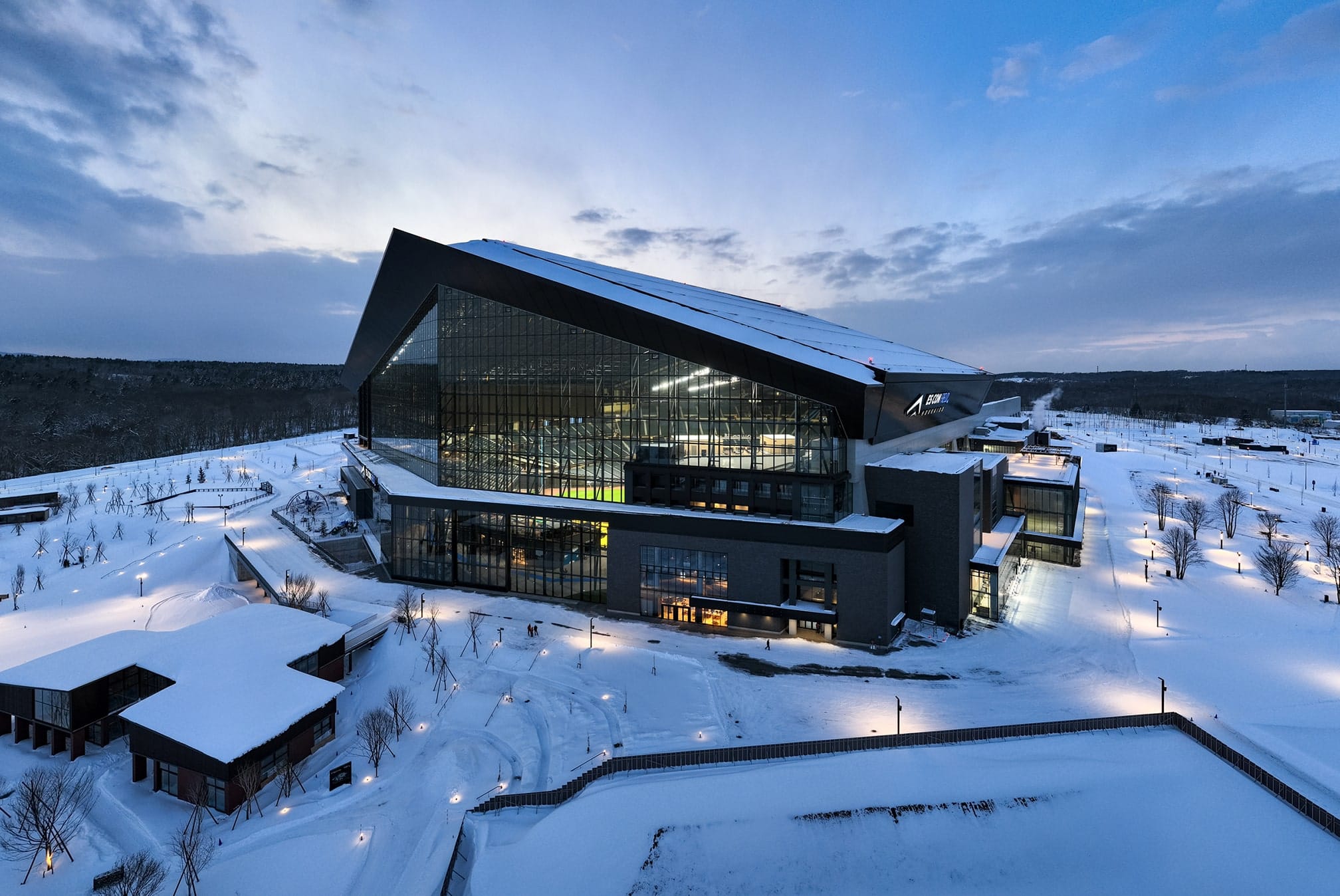
Completed in 2023 in Kitahiroshima City, Hokkaido, ES CON FIELD HOKKAIDO is the home ballpark of the Japanese professional baseball team Hokkaido Nippon-Ham Fighters. Its three-tier spectator stands can accommodate about 35,000 people. Giving top priority to harmony with the surrounding environment, the design blends into the locality with features such as a large gable roof, characteristic of Hokkaido, and multiple terraces along the stadium's middle floors.
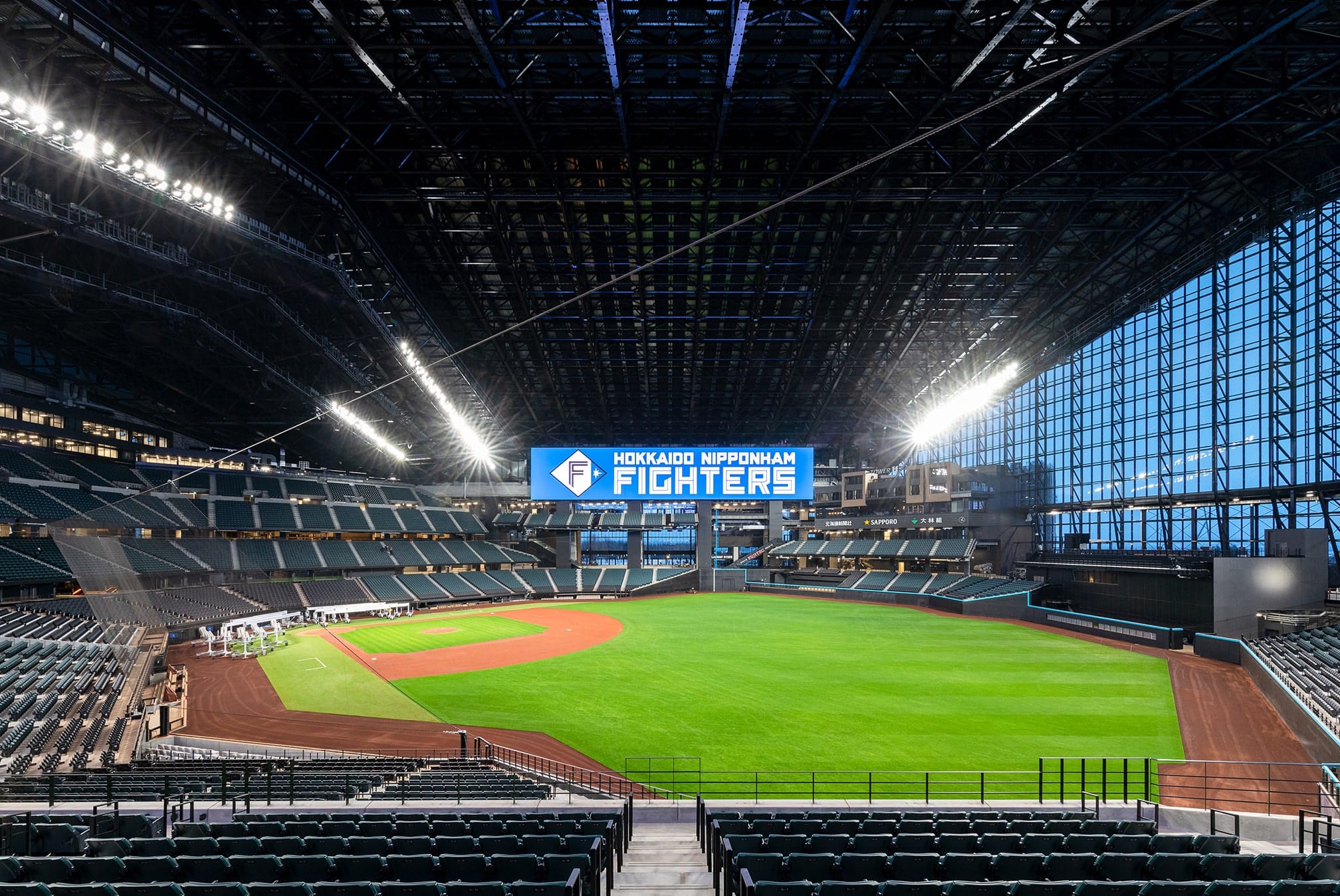
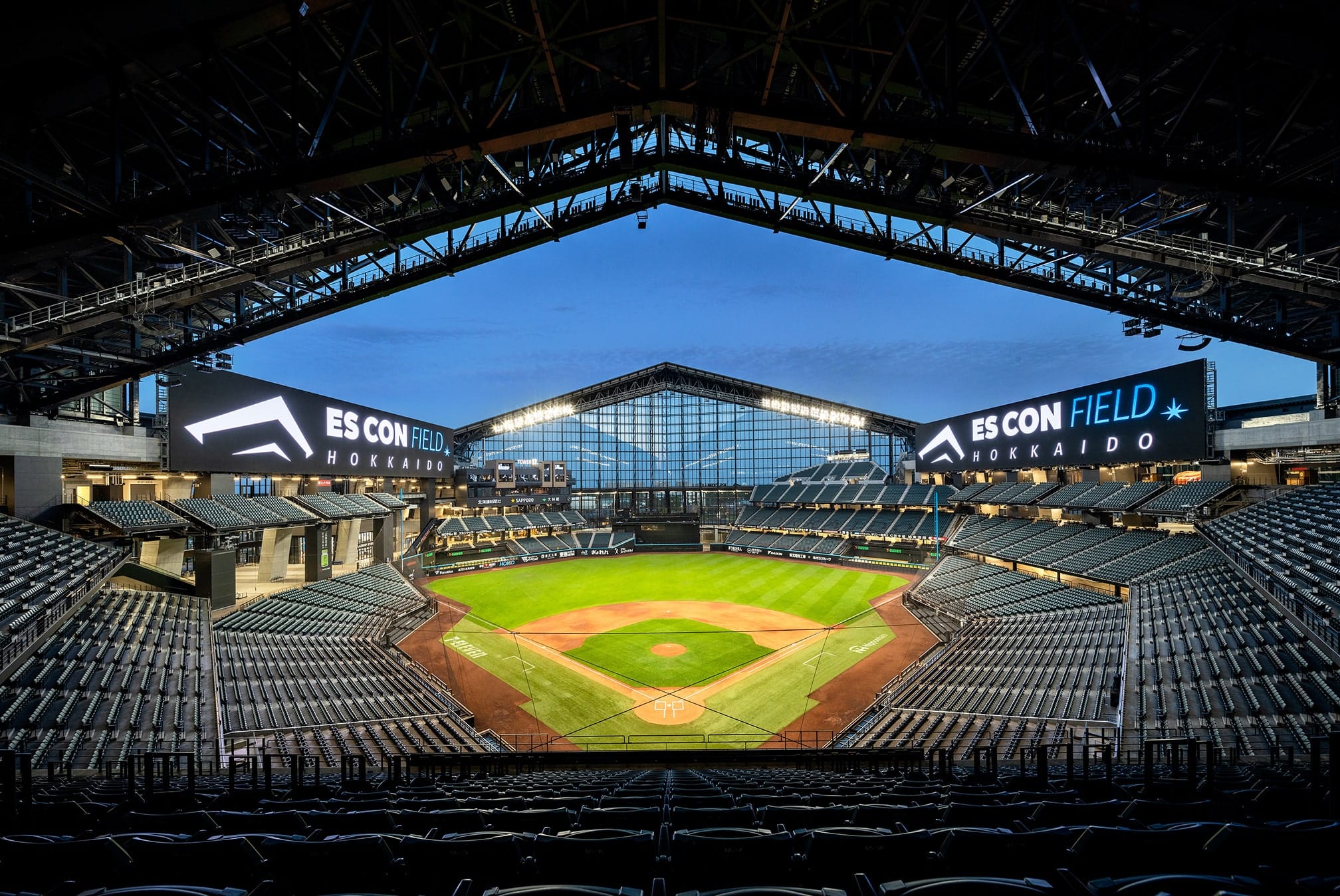
We created Japan's first ballpark with a retractable roof and a natural-grass playing field—the largest retractable roof in the world. The fresh scent and vivid green of the turf create a soothing atmosphere for spectators. Designed to delight all five senses, the ballpark puts the comfort of both players and fans first.
The design process below explores how we gave shape to the concept of "building a ballpark the world has never seen before."
- The Large Gable Roof: Design that Carries on Hokkaido's Cultural Traditions
- An Asymmetrical, Bowl-Shaped Stadium—Uncommon in Japan
- Japan's First Natural-Grass Ballpark with a Retractable Roof
- Simulation of Batted Ball Trajectories
- One of the Most Spacious Team Facilities in the World, Totaling Approximately 3,400 m2
- Community Development with the Ballpark at Its Core
- Structural Planning to Operate a Retractable Roof Weighing Approximately 10,000 t
- Construction without Precedent
The Large Gable Roof: Design that Carries on Hokkaido's Cultural Traditions
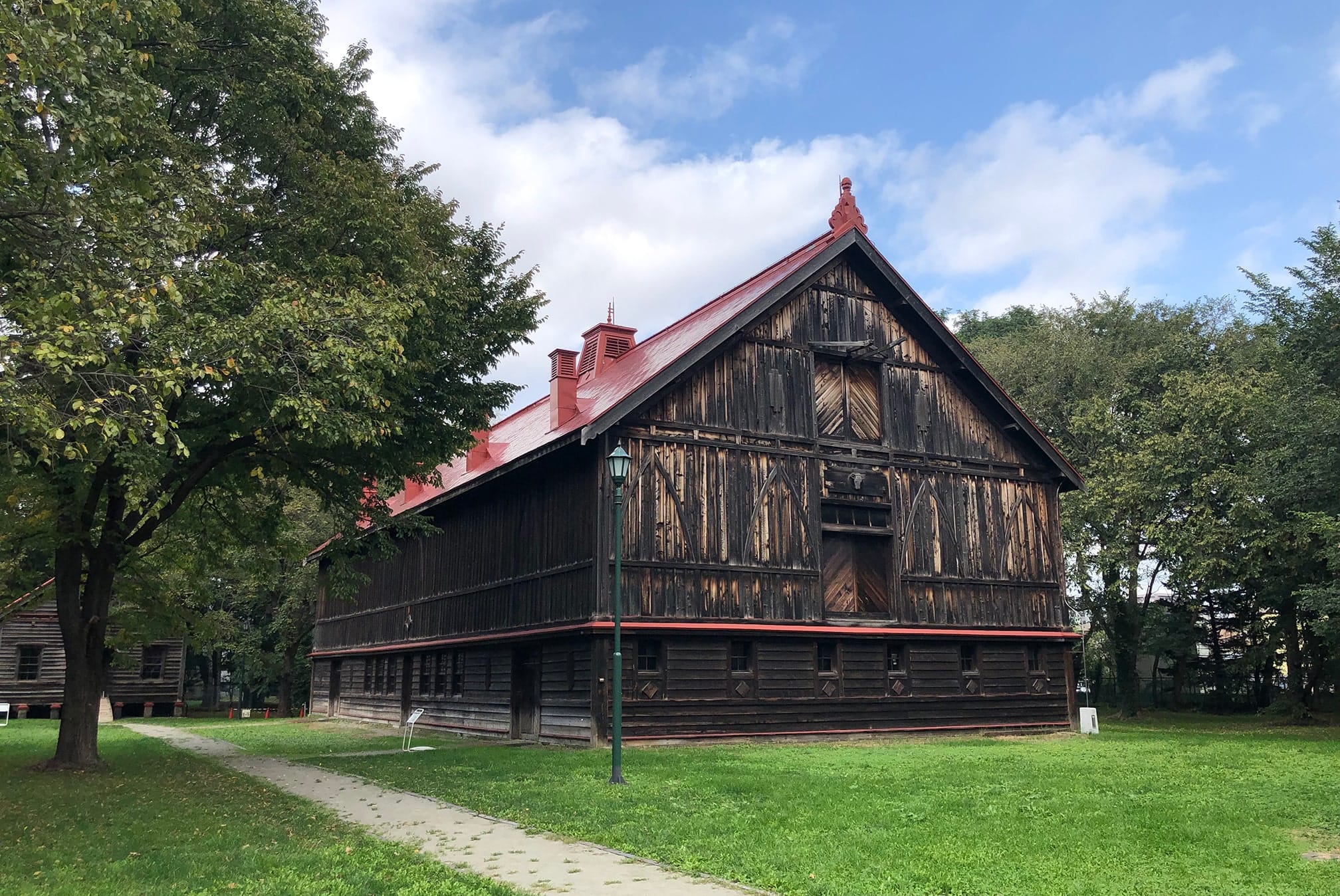
In exploring designs for the new ballpark, we incorporated the culture, natural features, and other aspects of Hokkaido and Japan while leveraging expertise from Major League Baseball stadiums. After thoroughly identifying the site's culture and conditions, we adopted an exterior defined by a prominent gable roof—familiar across Hokkaido. With brick-toned tiles on the outer walls, the ballpark aims to become a new landmark for the region.
An Asymmetrical, Bowl-Shaped Stadium—Uncommon in Japan

The ballpark adopts an asymmetrical layout: the home‑team side (right field) maximizes seating, while the visiting‑team side (left field) houses upper‑level amenities such as a hotel and sauna. This plan is uncommon among ballparks in Japan.
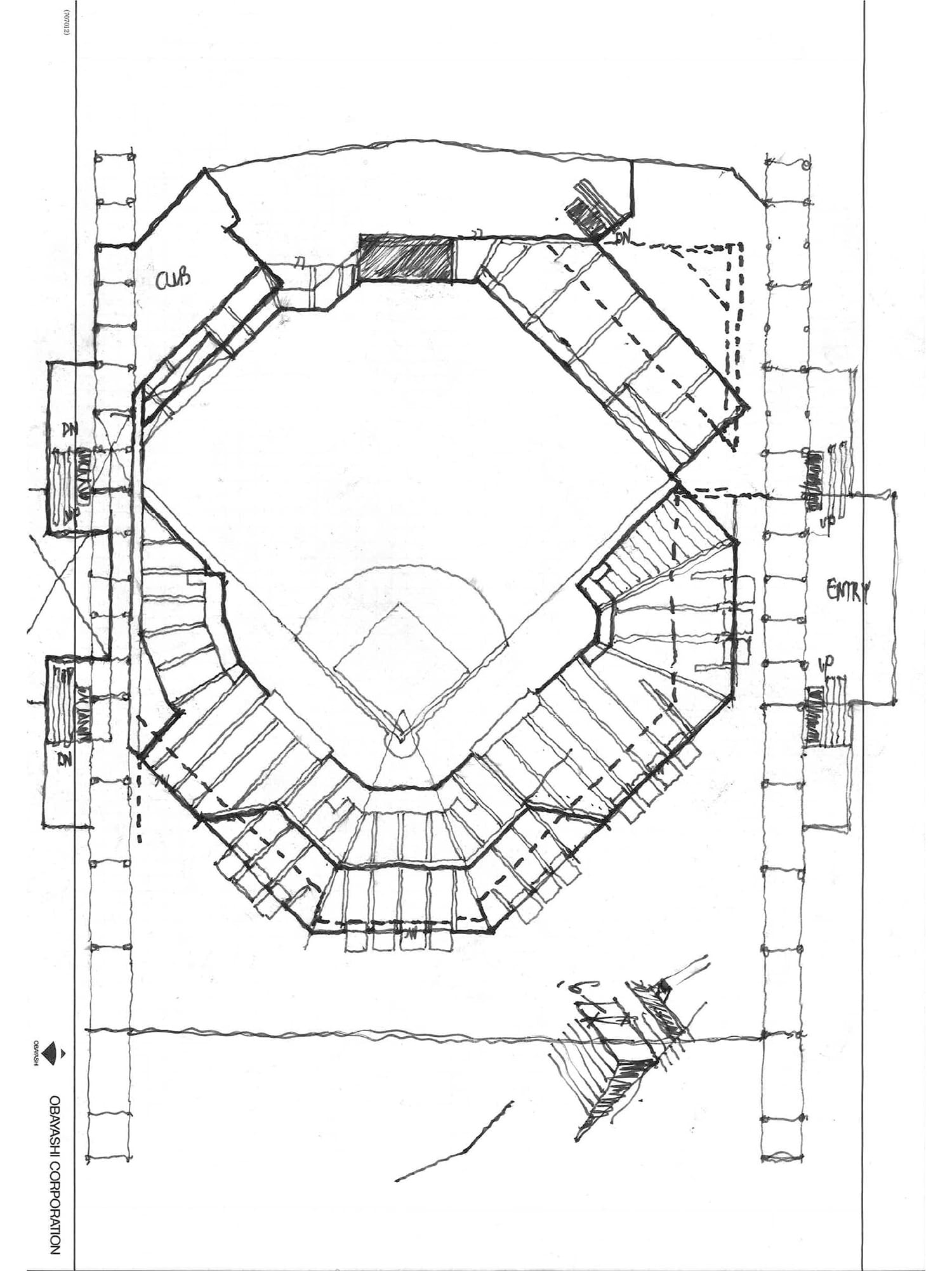

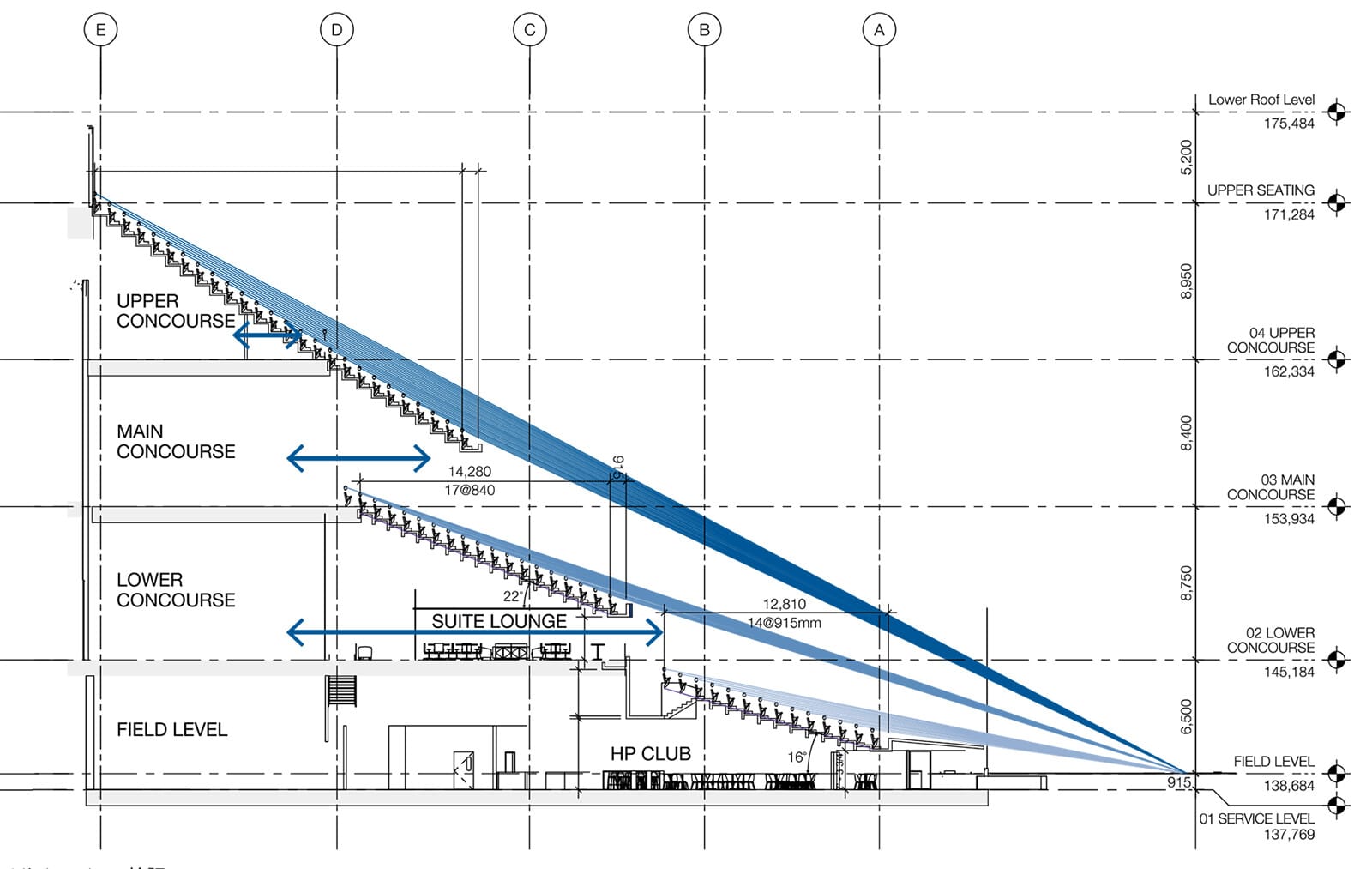
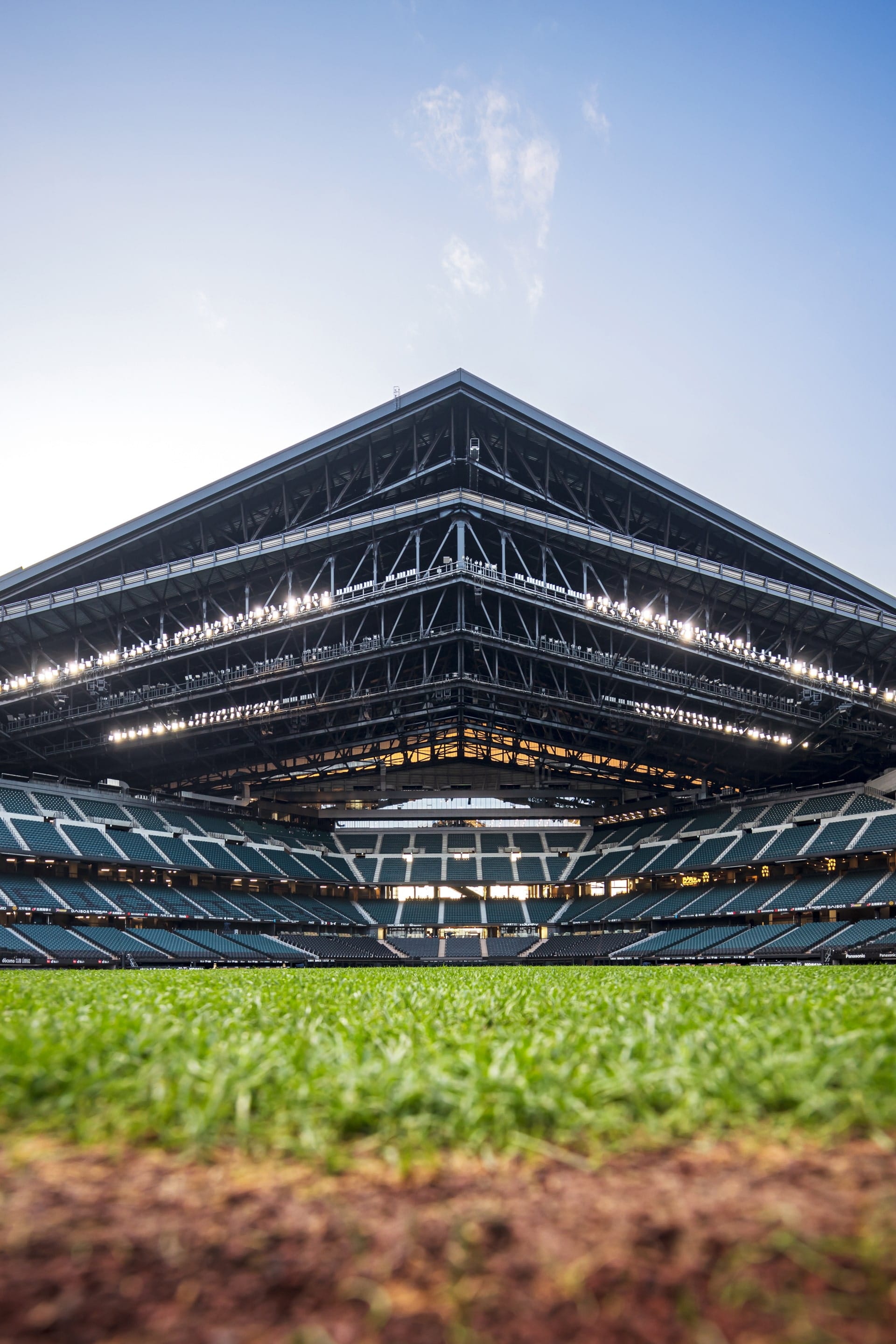
Spectator stands wrap 360° around the field in a bowl-shaped cross-section, offering clear sightlines from every seat. To bring spectators closer and enhance unity and immersion, the riser height is 31 cm per row in the lower tiers (two 15.5‑cm steps) and 49.5 cm per row in the upper tiers (three 16.5‑cm steps). We verified riser and tread dimensions with a program built in 3D modeling software, optimizing for sightlines and constructability.
Japan's First Natural-Grass Ballpark with a Retractable Roof
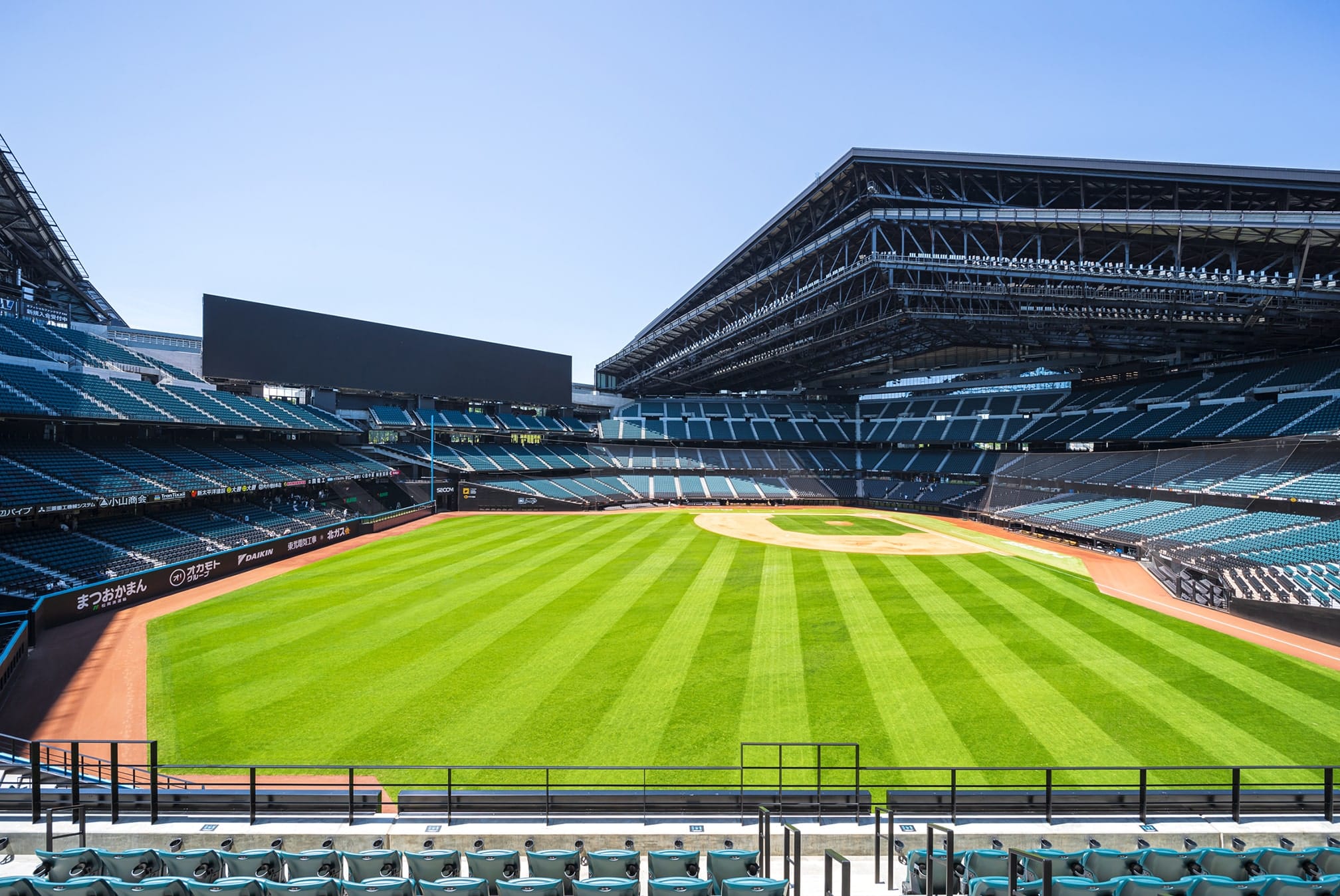
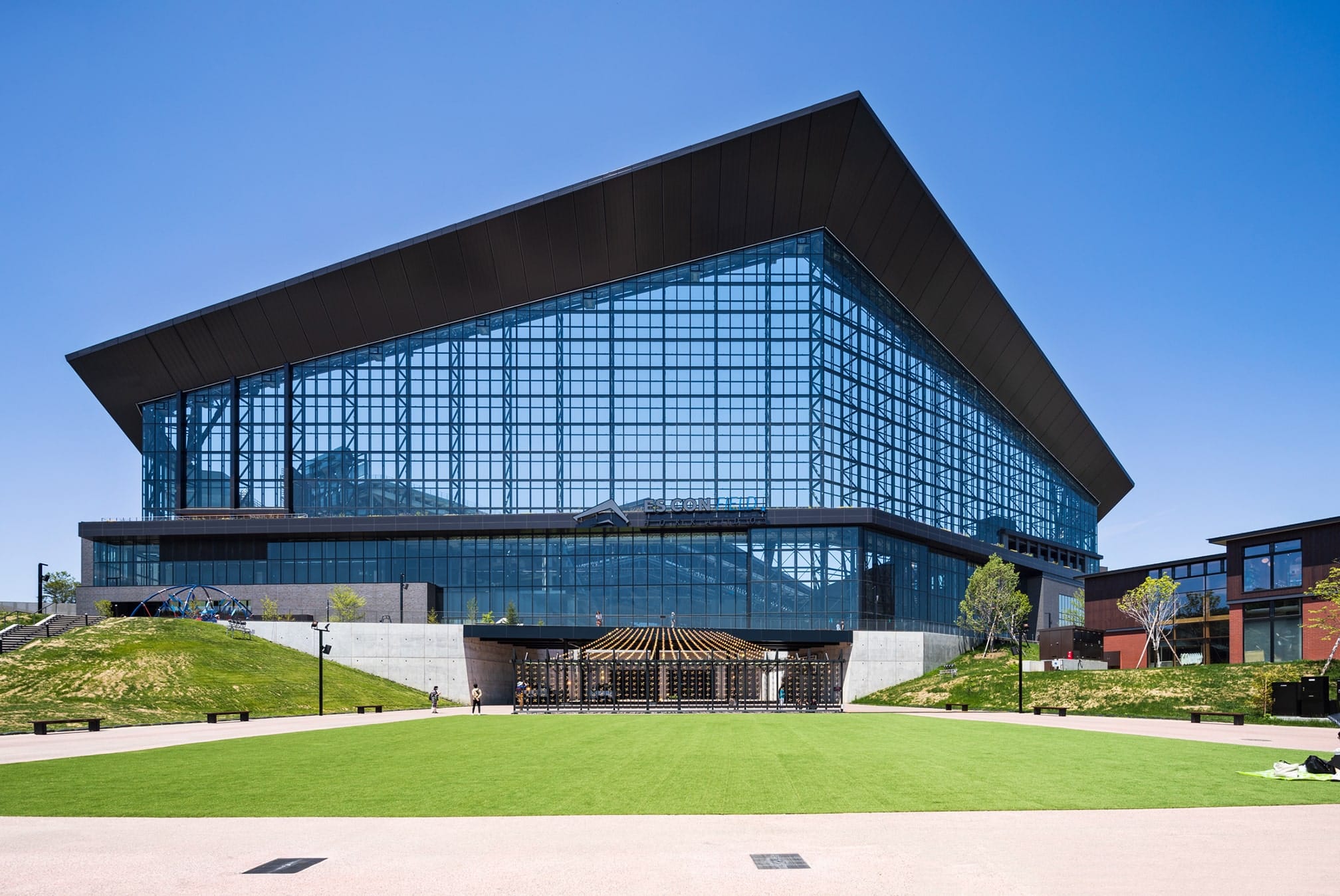
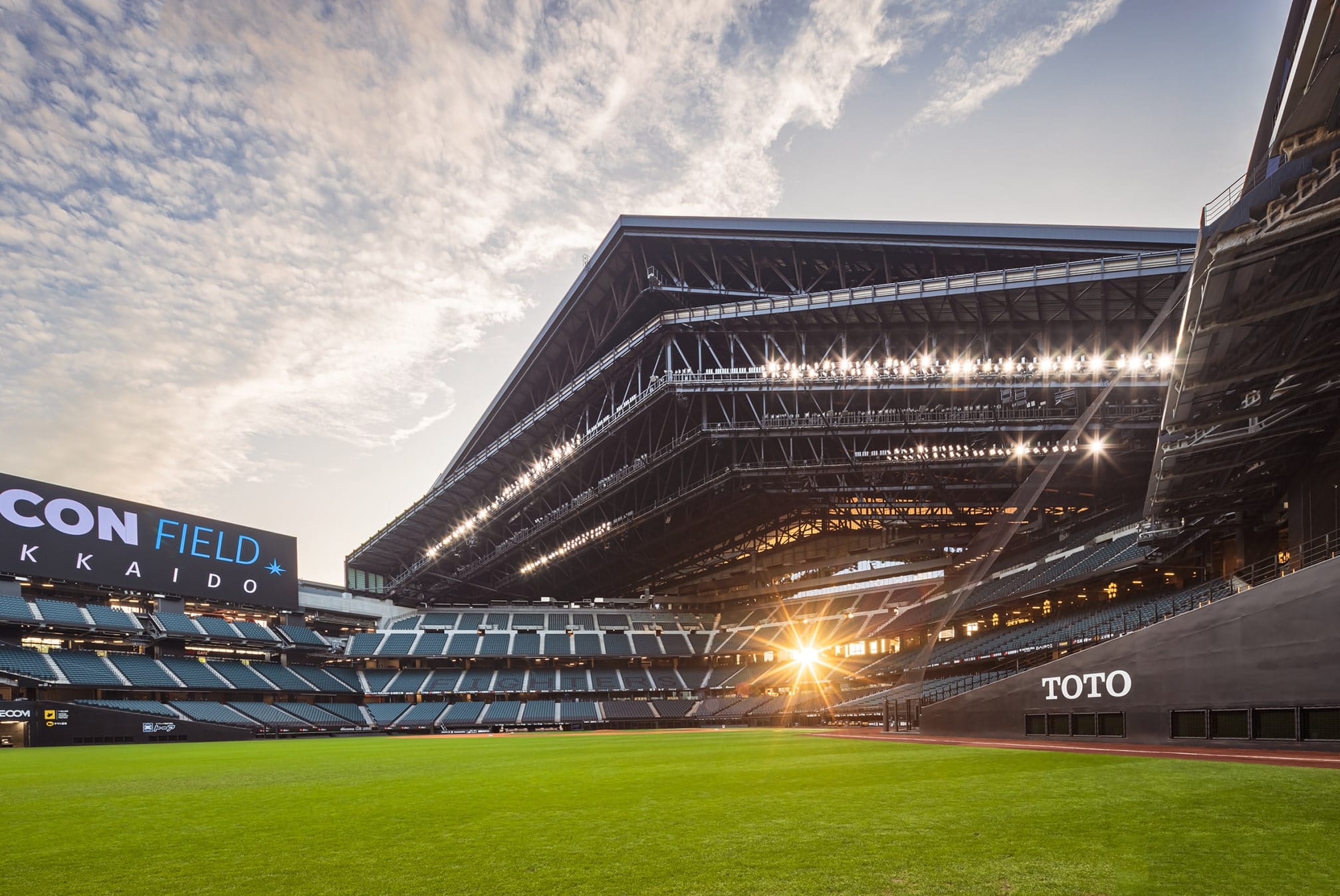
ES CON FIELD HOKKAIDO is the first ballpark with a retractable roof to feature a natural grass playing field. To cultivate natural grass in Hokkaido's snowy, cold climate, we adopted a retractable roof and created a glass wall along the southeast side to admit sunlight and wind. Before finalizing the design, we verified a full range of factors to optimize grass photosynthesis and respiration.
-
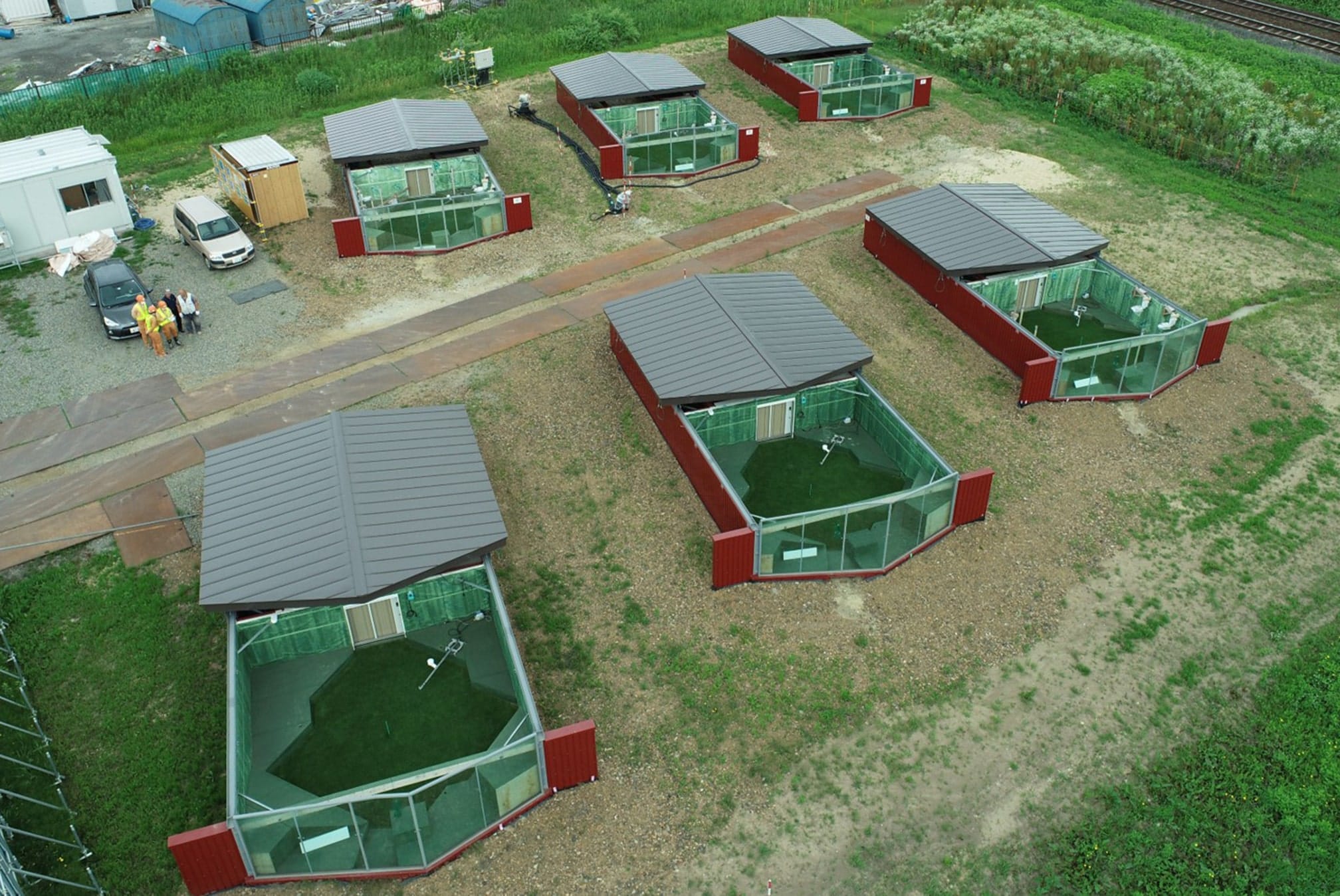
We built six 1:30 scale mock‑ups, matched for factors including orientation and grass species, and spent about two years testing cold-climate cultivation.
-
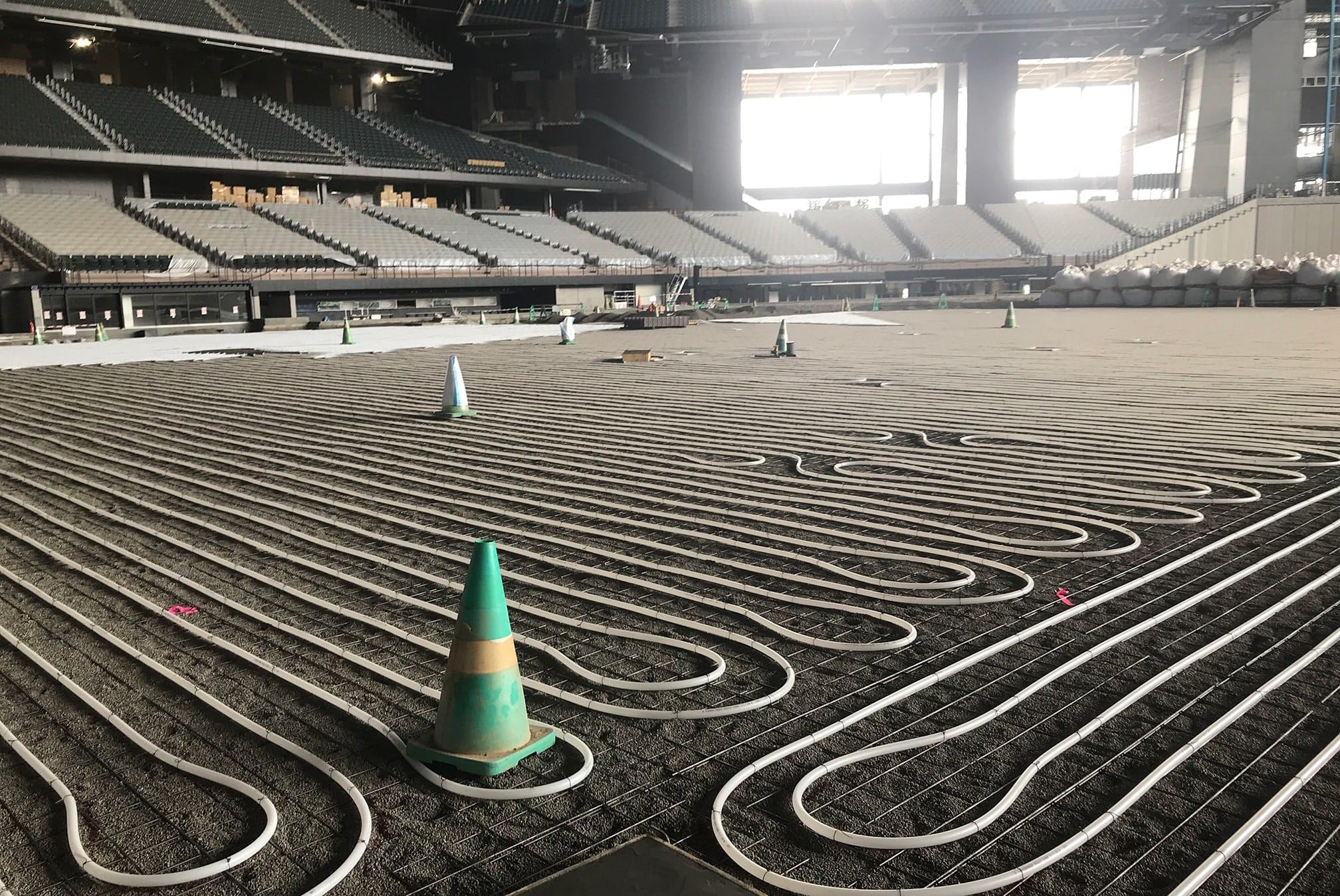
Beneath the field, pipes circulate cold water in the summer and warm water in the winter to maintain the optimal turf temperature year-round.
-
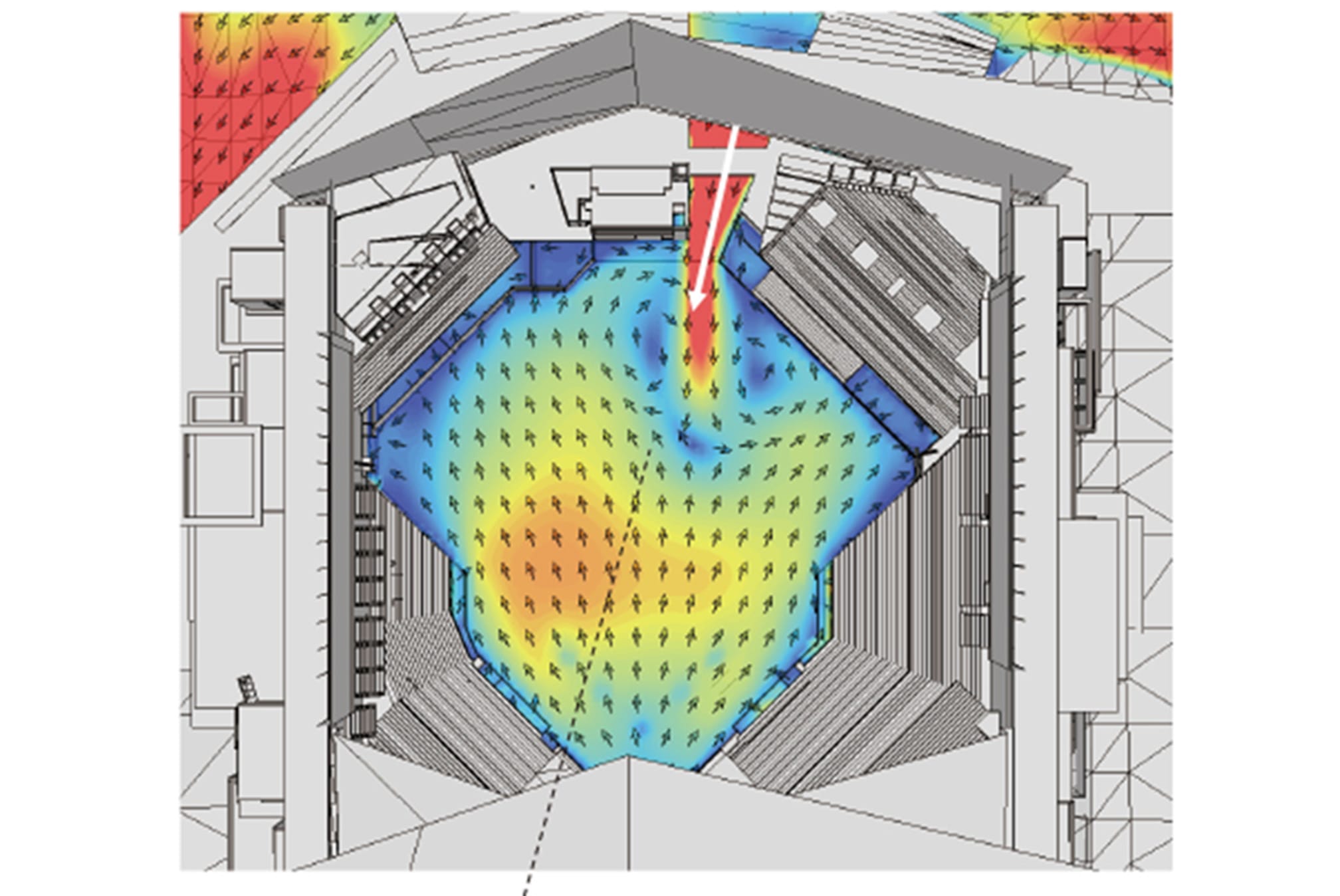
A wind tunnel at the base of the glass wall admits natural wind; simulations identified circulation suited to turf growth.
Simulation of Batted Ball Trajectories
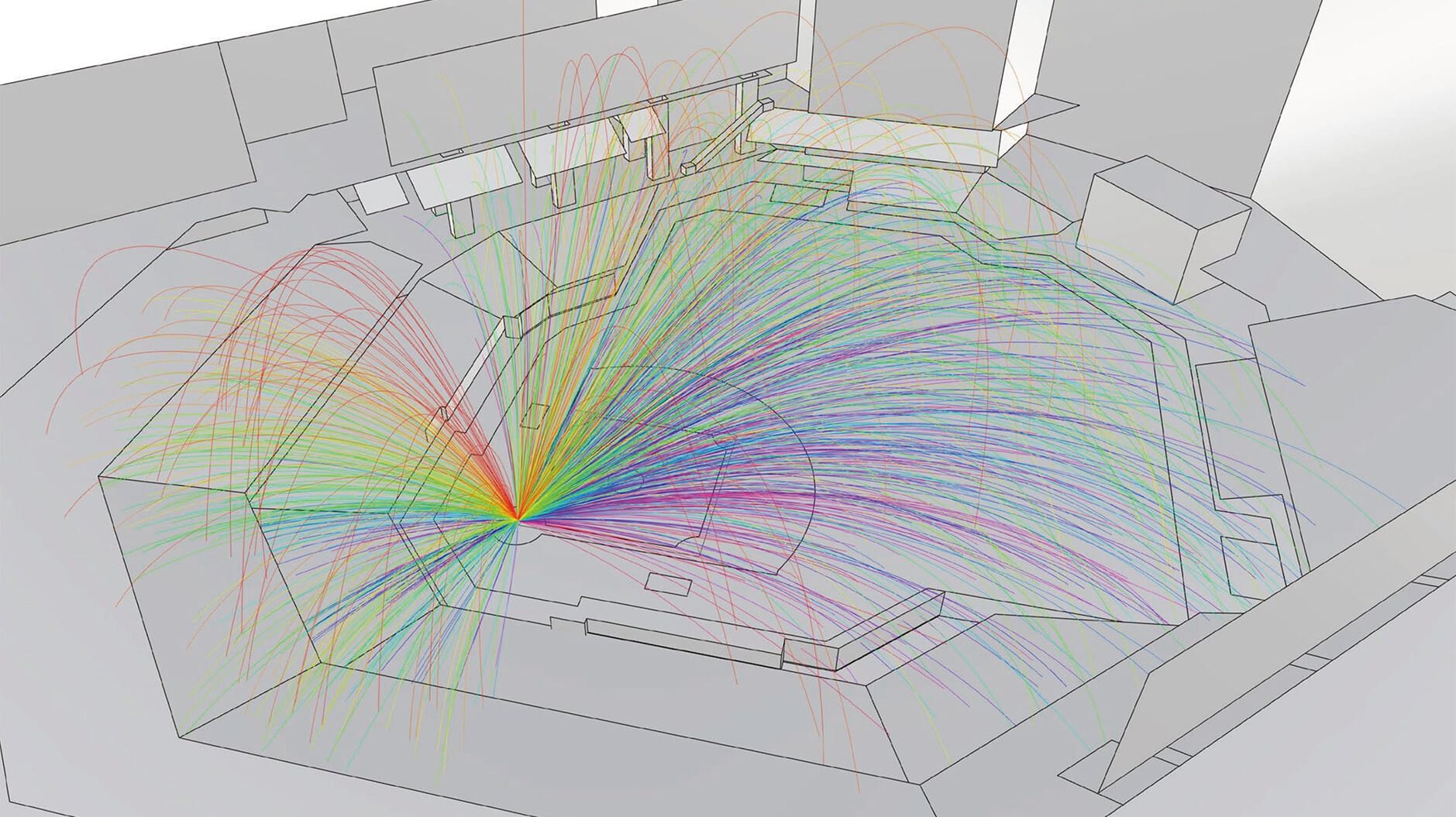
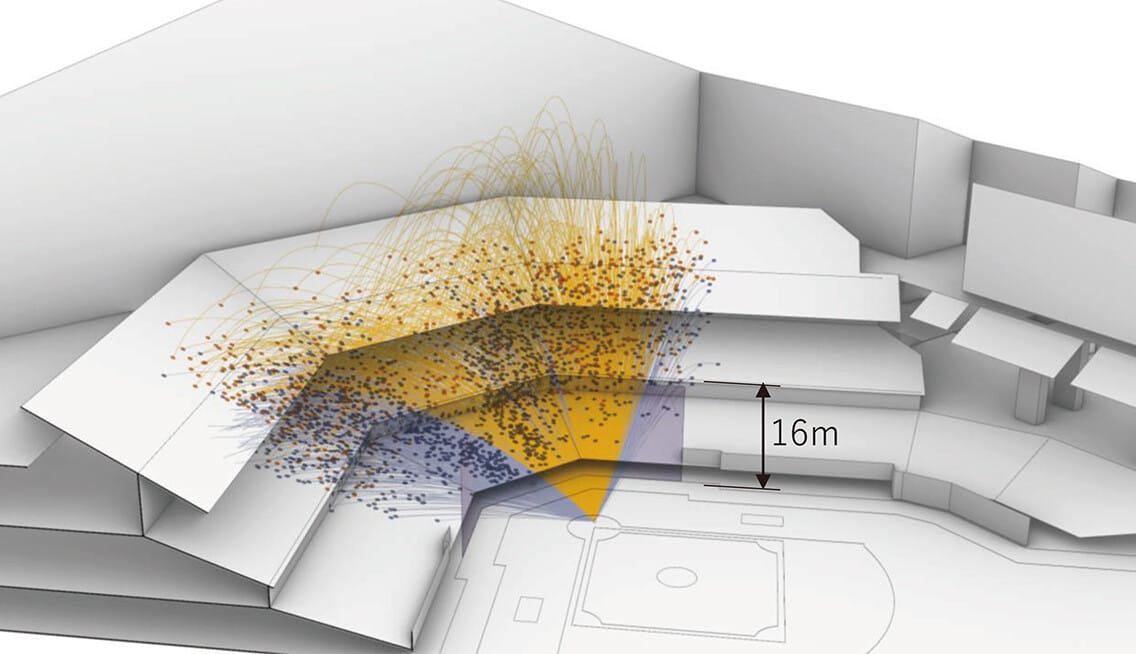
For spectator safety, we studied the size, shape, and specifications of protective netting and assessed materials such as glass in areas subject to impact. To balance sightlines and safety behind home plate, we prioritized stopping the majority of high‑risk, high-impact balls rather than addressing those that pose less danger, and therefore installed protective netting about 20 m high.
One of the Most Spacious Team Facilities in the World, Totaling Approximately 3,400 m2
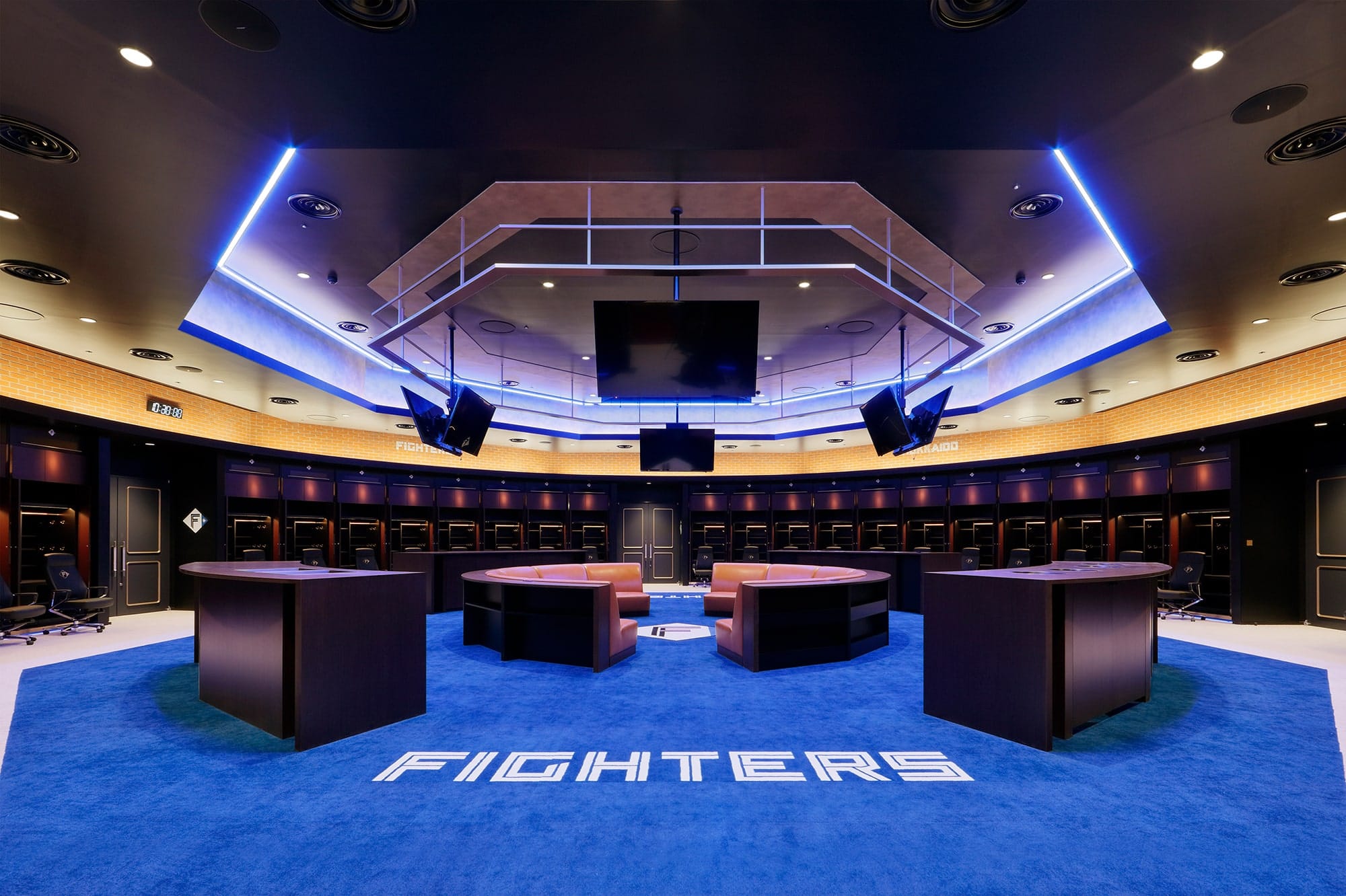
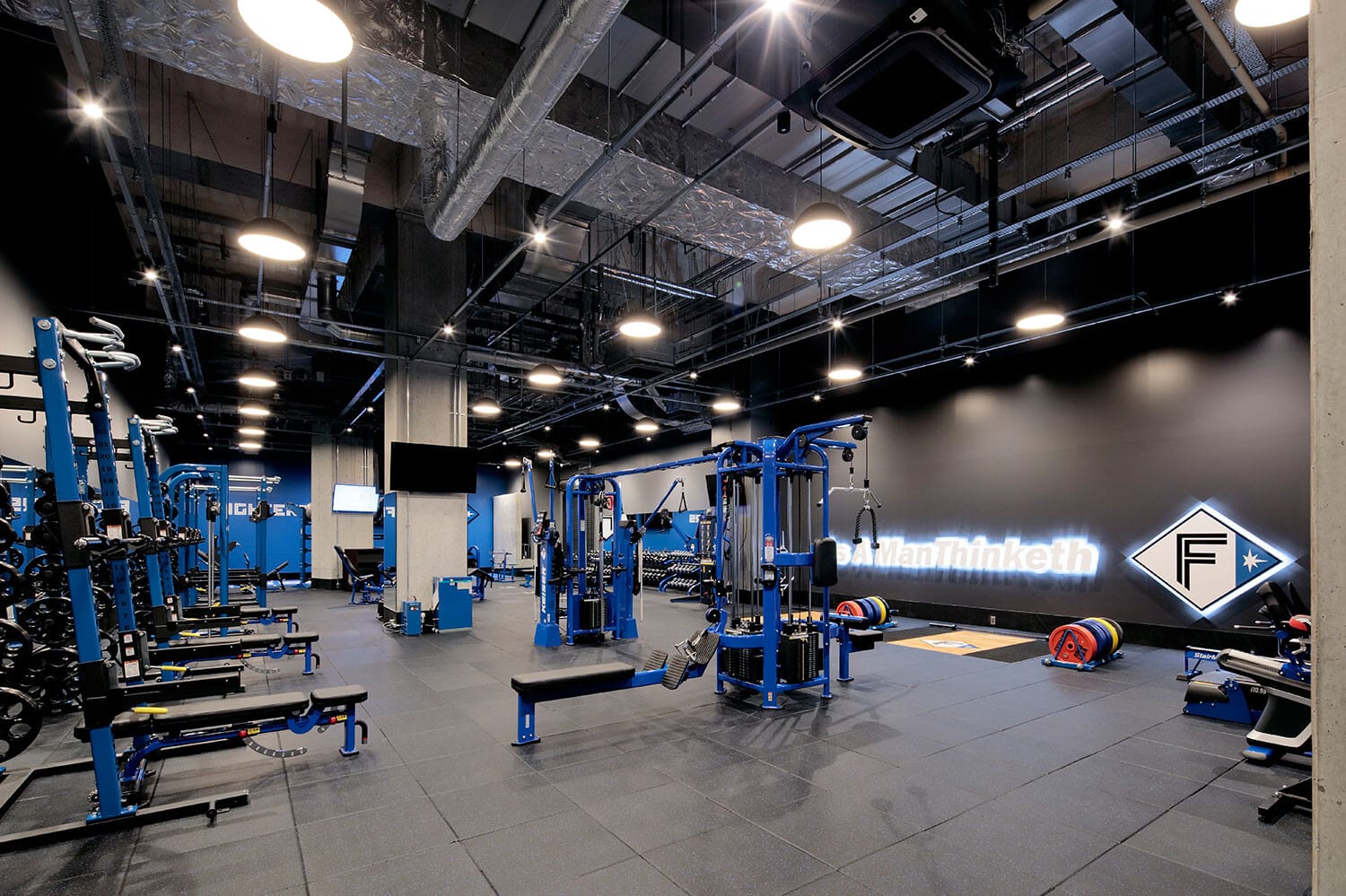
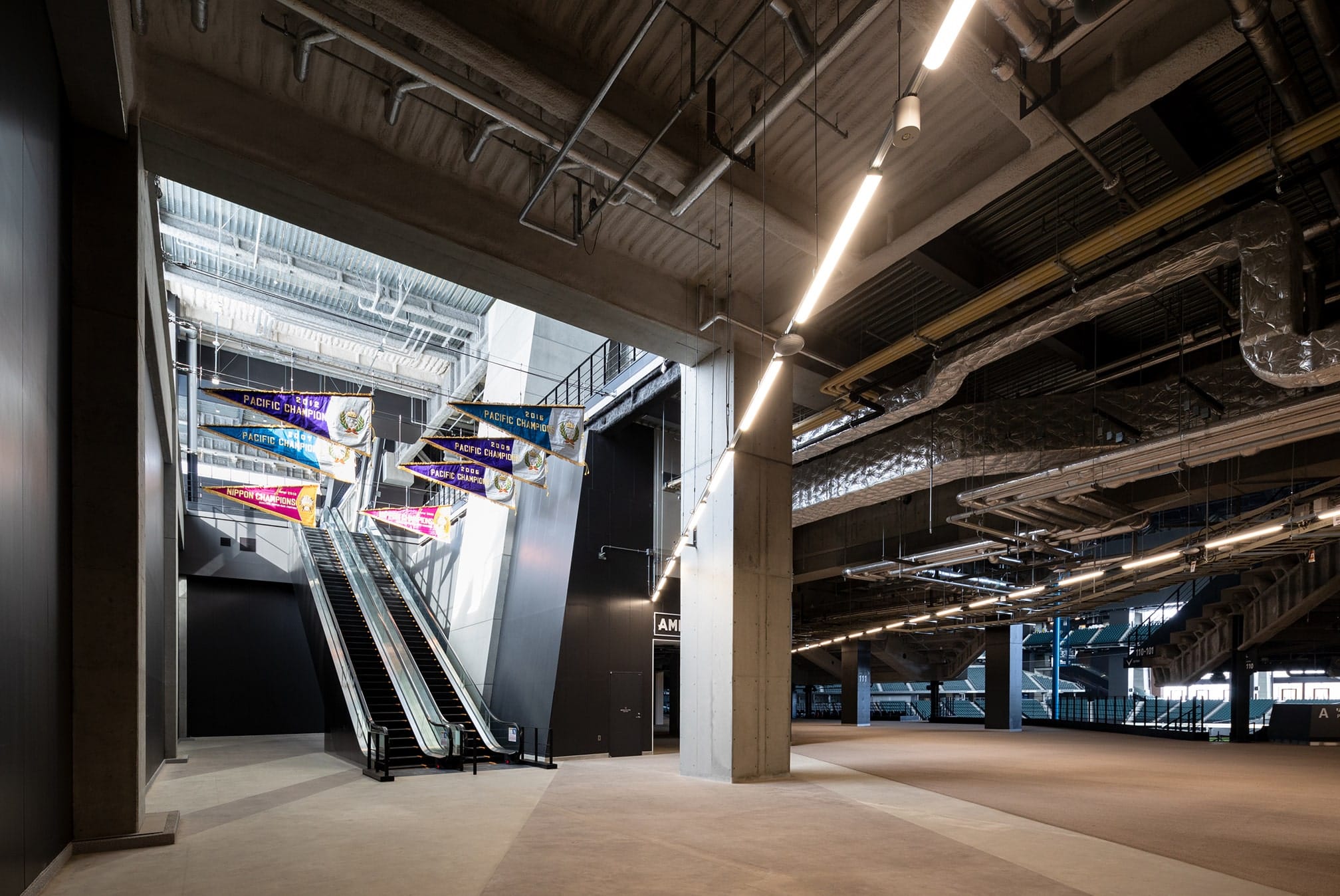
Totaling approximately 3,400 m2, the team area ranks among the world's largest—even compared with Major League teams. The weight room, trainers' room, and related facilities are arranged for efficient movement by players, managers, and staff so they can perform at their best.
Community Development with the Ballpark at Its Core
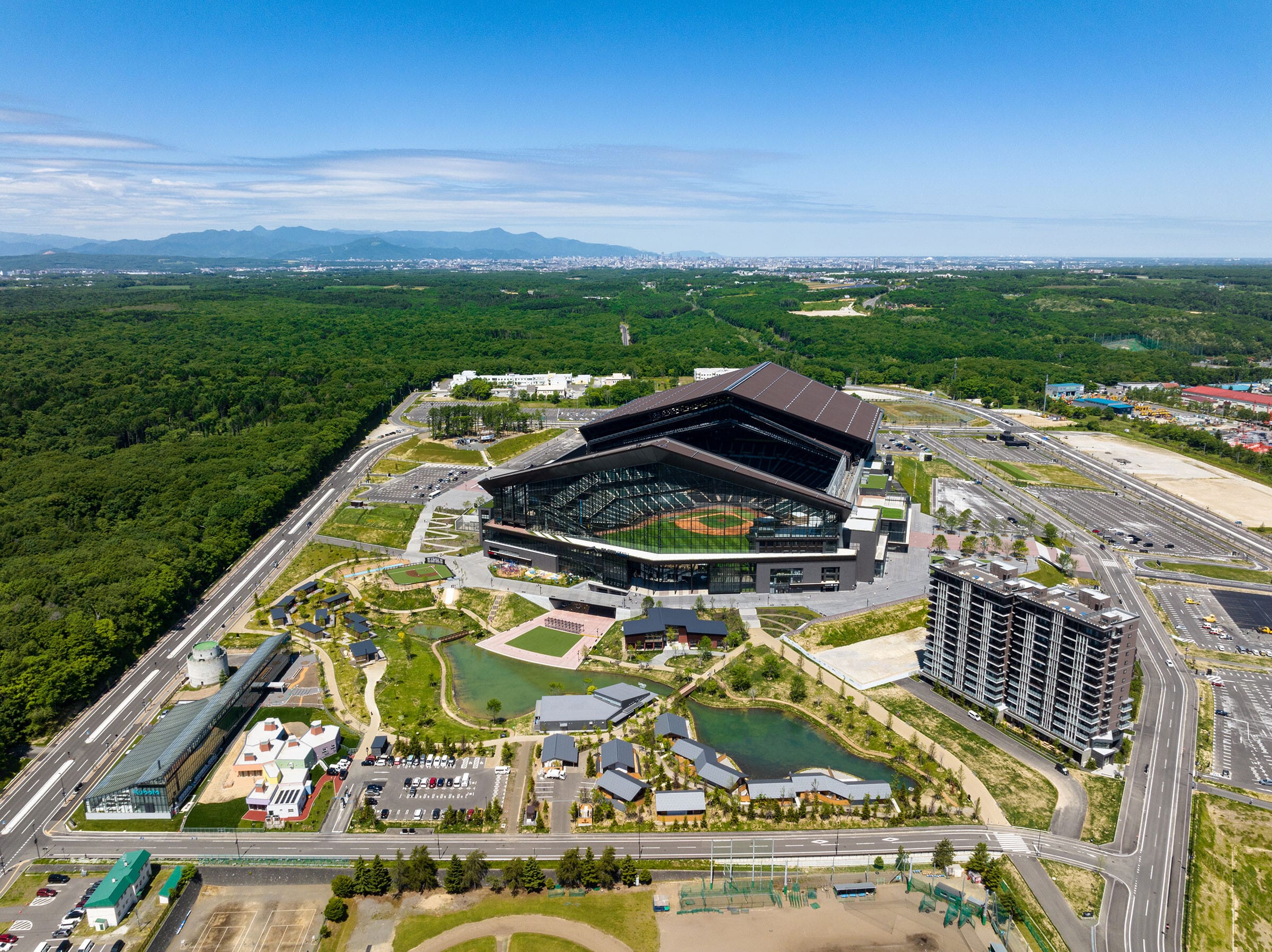
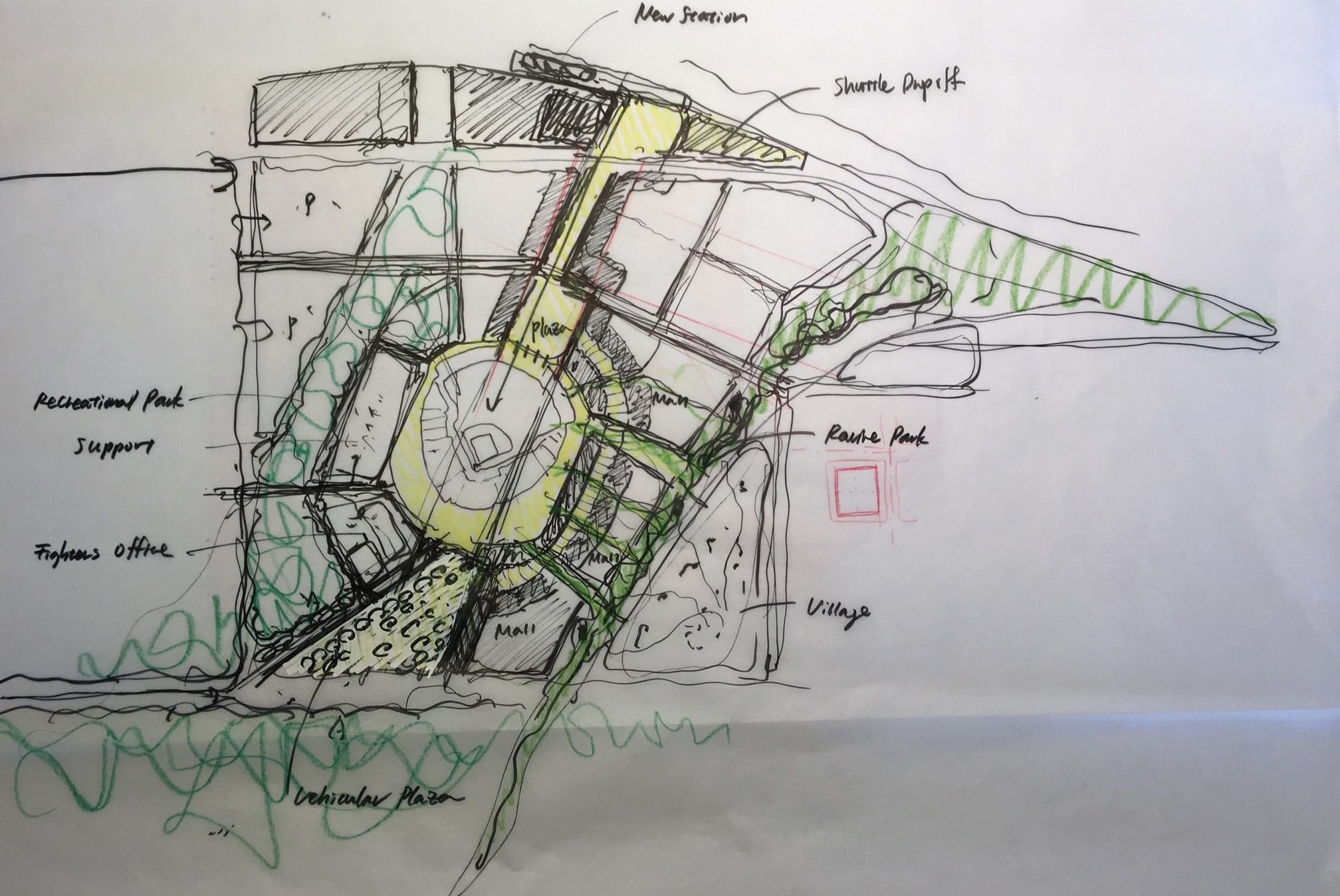
The broader district encompassing ES CON FIELD HOKKAIDO—Hokkaido Ballpark F Village—was planned as a space for co-creation, where fans, partner companies, and local residents join hands to energize the community and contribute to society. With the ballpark's opening in Spring 2023, partners launched diverse services and facilities: a villa resort, senior housing, glamping, early childhood education and care center, restaurants, an agricultural learning facility, a kids' play area, and dog runs. Although a professional baseball season hosts only around 80 home games, ballpark‑centered community development has established a creative public realm that attracts people of all ages and nationalities even on non-game days.
Structural Planning to Operate a Retractable Roof Weighing Approximately 10,000 t
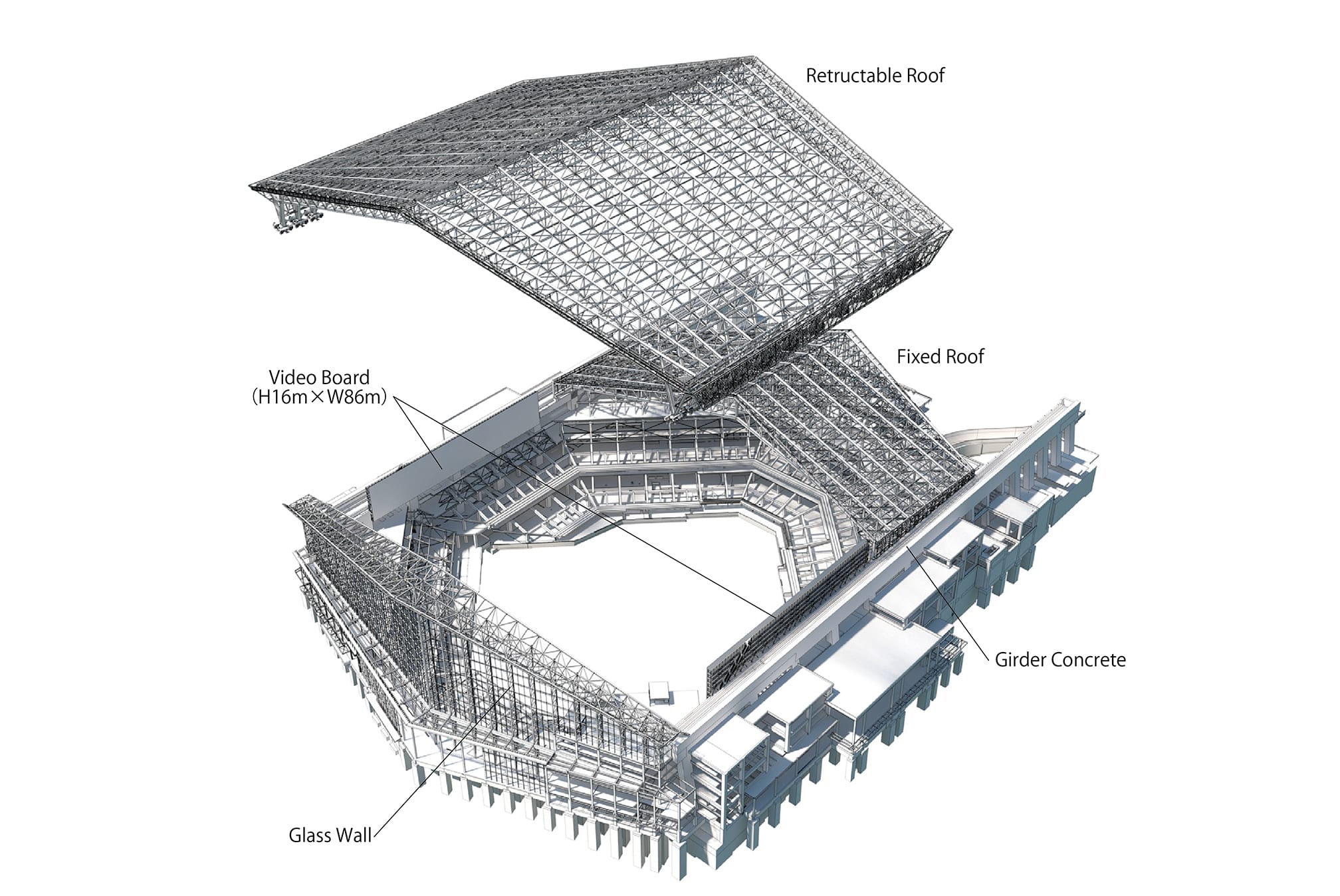
With a horizontal projected area of approximately 25,000 m2 and a span of 167 m, the roof is one of the largest of its kind. Twelve one-directional truss beams form the main frame supporting the roof, which weighs approximately 10,000 t. The roof travels 132 m along track girders to open or close in about 25 minutes. Each end of the trusses is supported by bogies—24 in total—that move slowly across the structure.
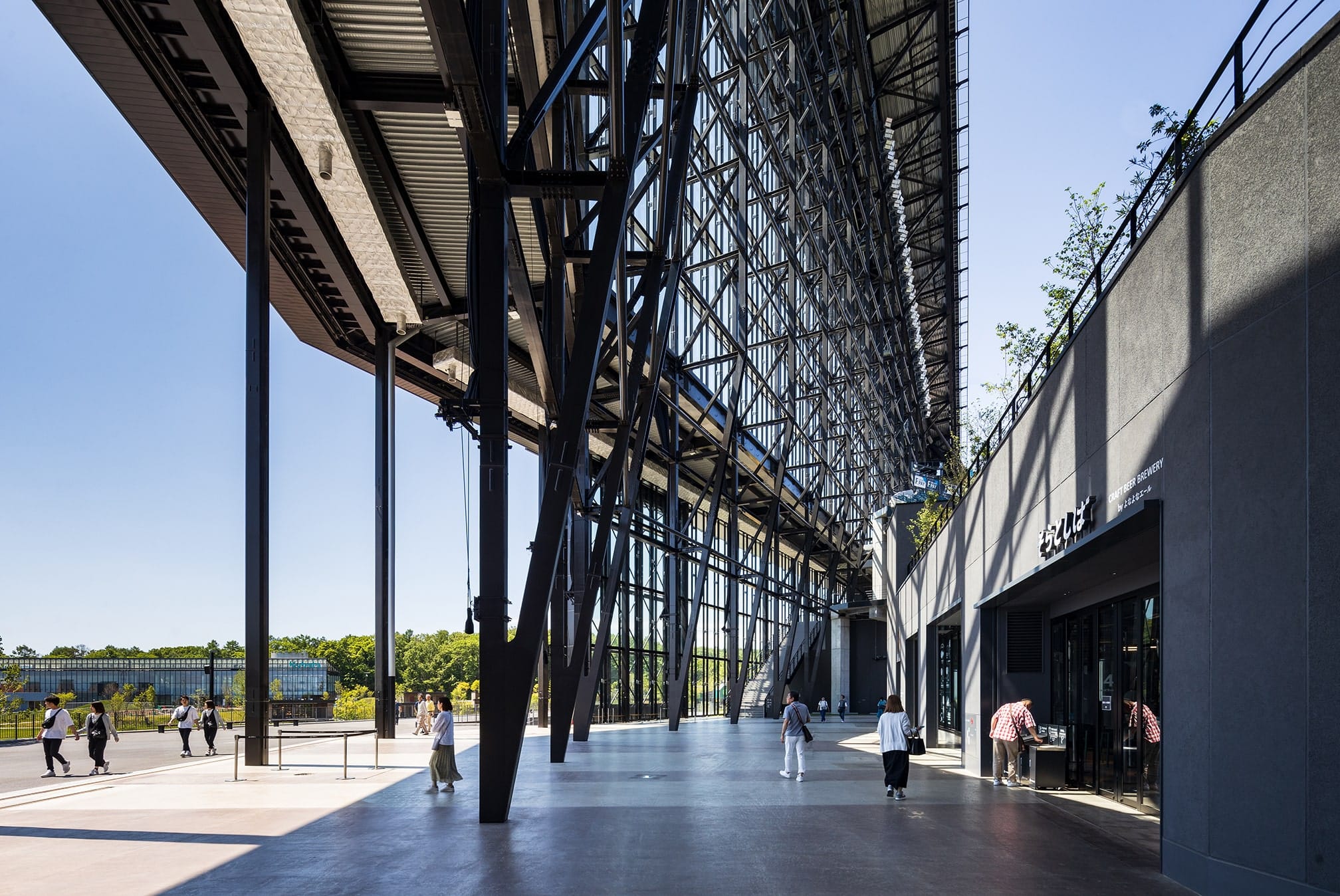
The glass-wall structure on the ballpark's southeast side is designed to admit abundant sunlight for turf growth. A steel frame supports both the glass wall—reaching 70 m at its highest—and the roof.
Construction without Precedent
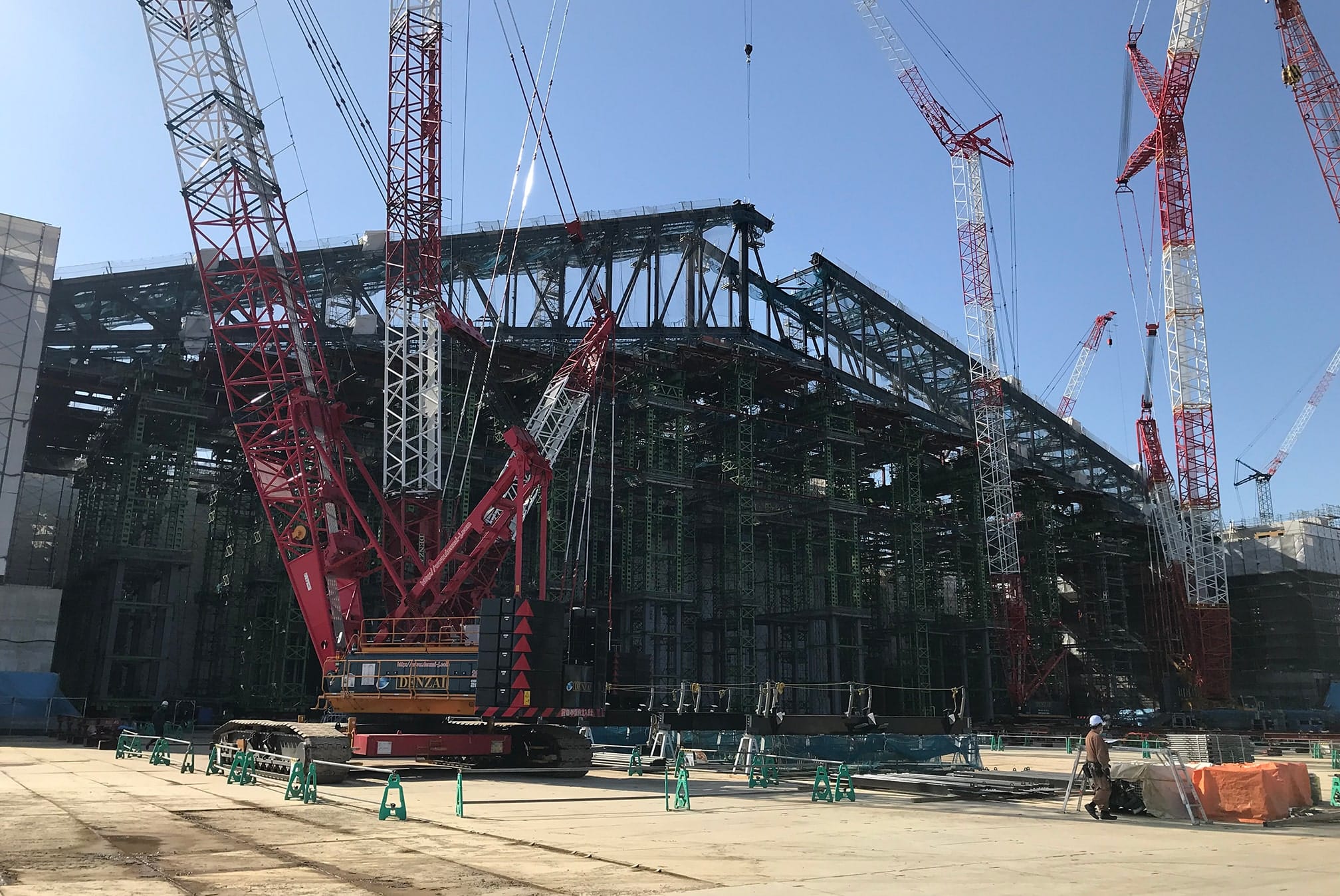
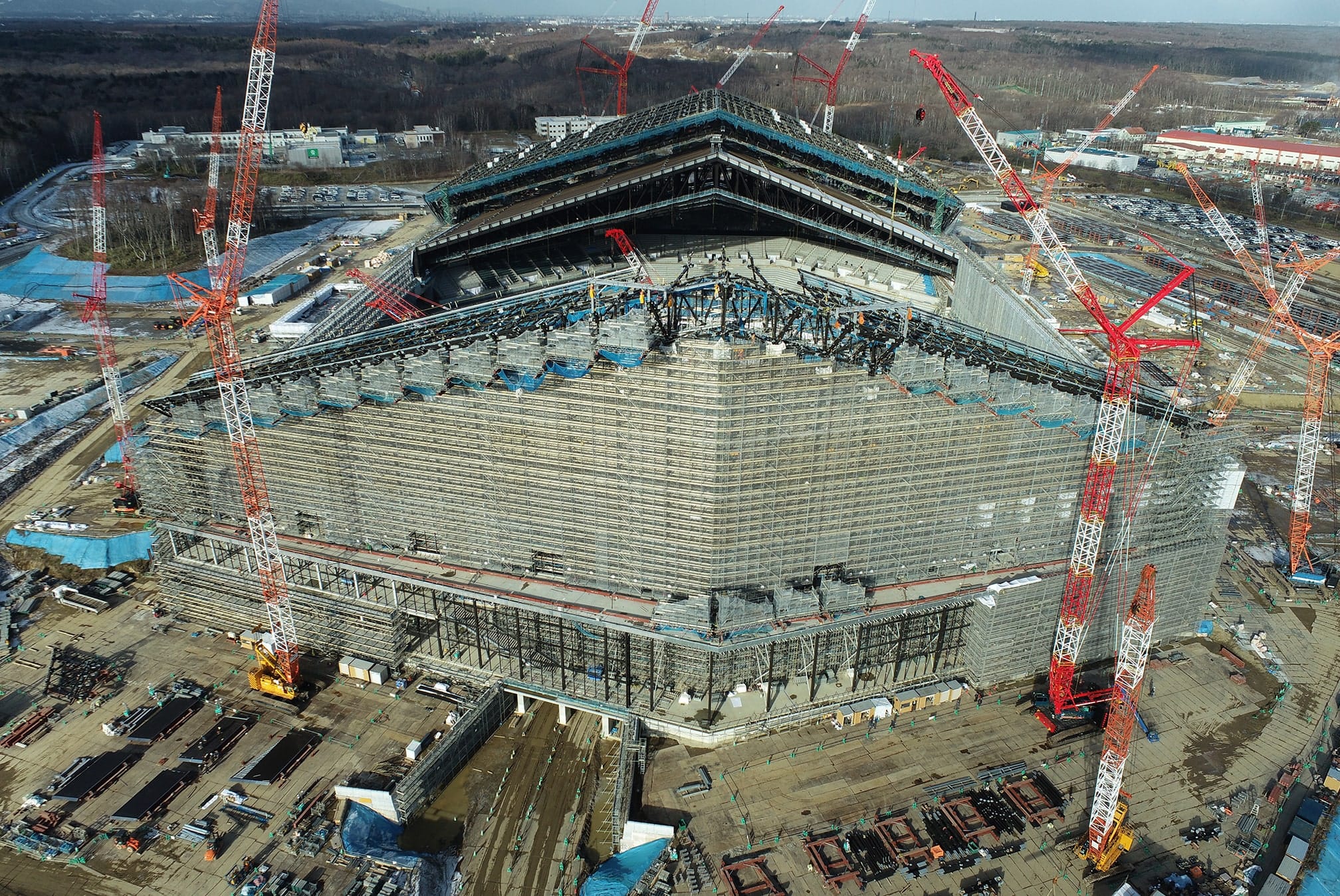
The ballpark had to be delivered in 32 months while tackling a broad range of challenges: its unprecedented shape, the large retractable roof and expansive glass wall, natural grass, the impact of the COVID-19 pandemic, and the snow and low temperatures of Hokkaido's harsh winters. We were able to complete ES CON FIELD HOKKAIDO thanks to the efforts of over 600,000 people in total who supported us in pressing forward with construction and overcoming many difficulties.
Note: This page reflects information as of May 2024.