



FOCUS: Design Stories
O-NES TOWER
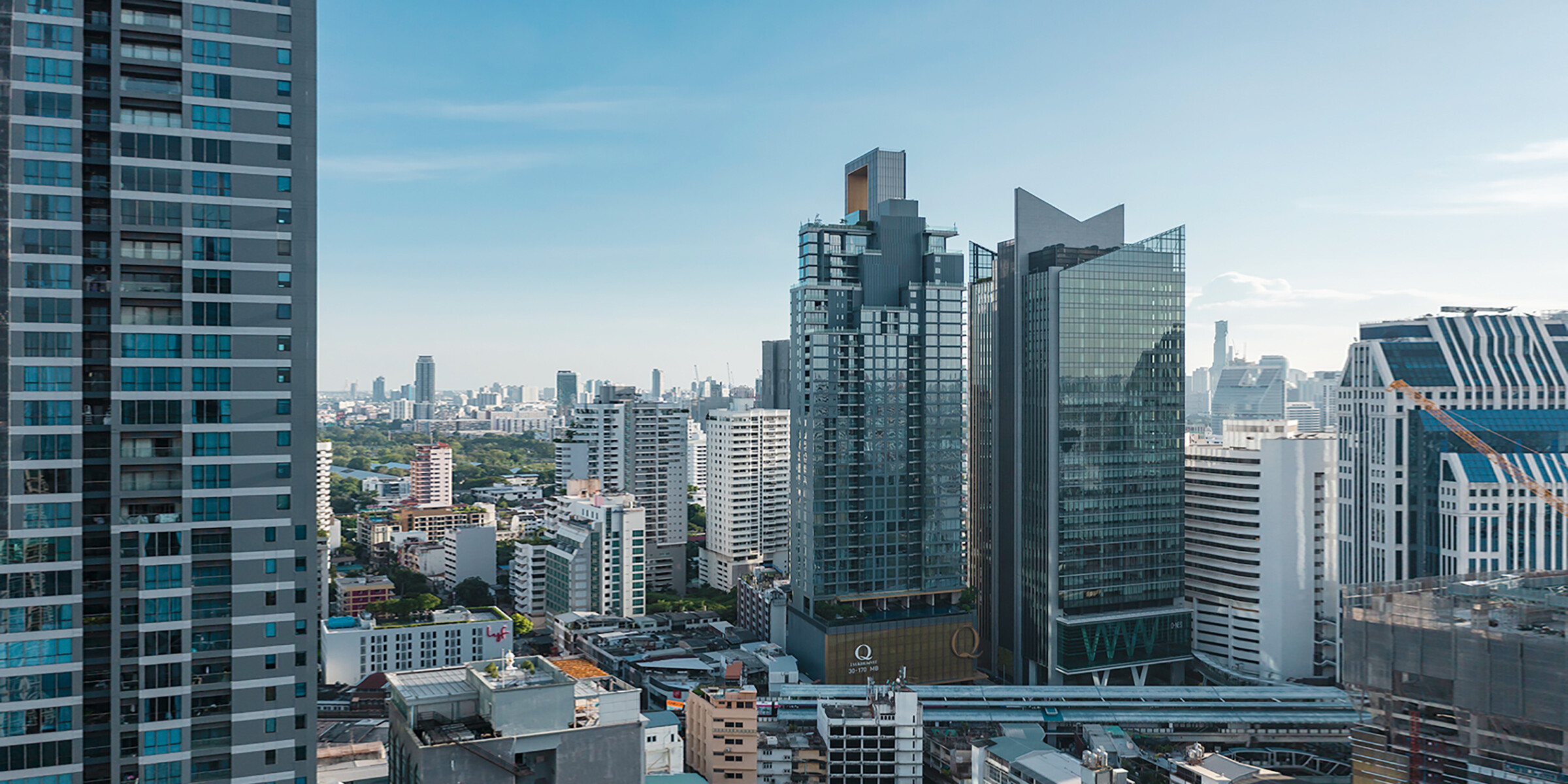
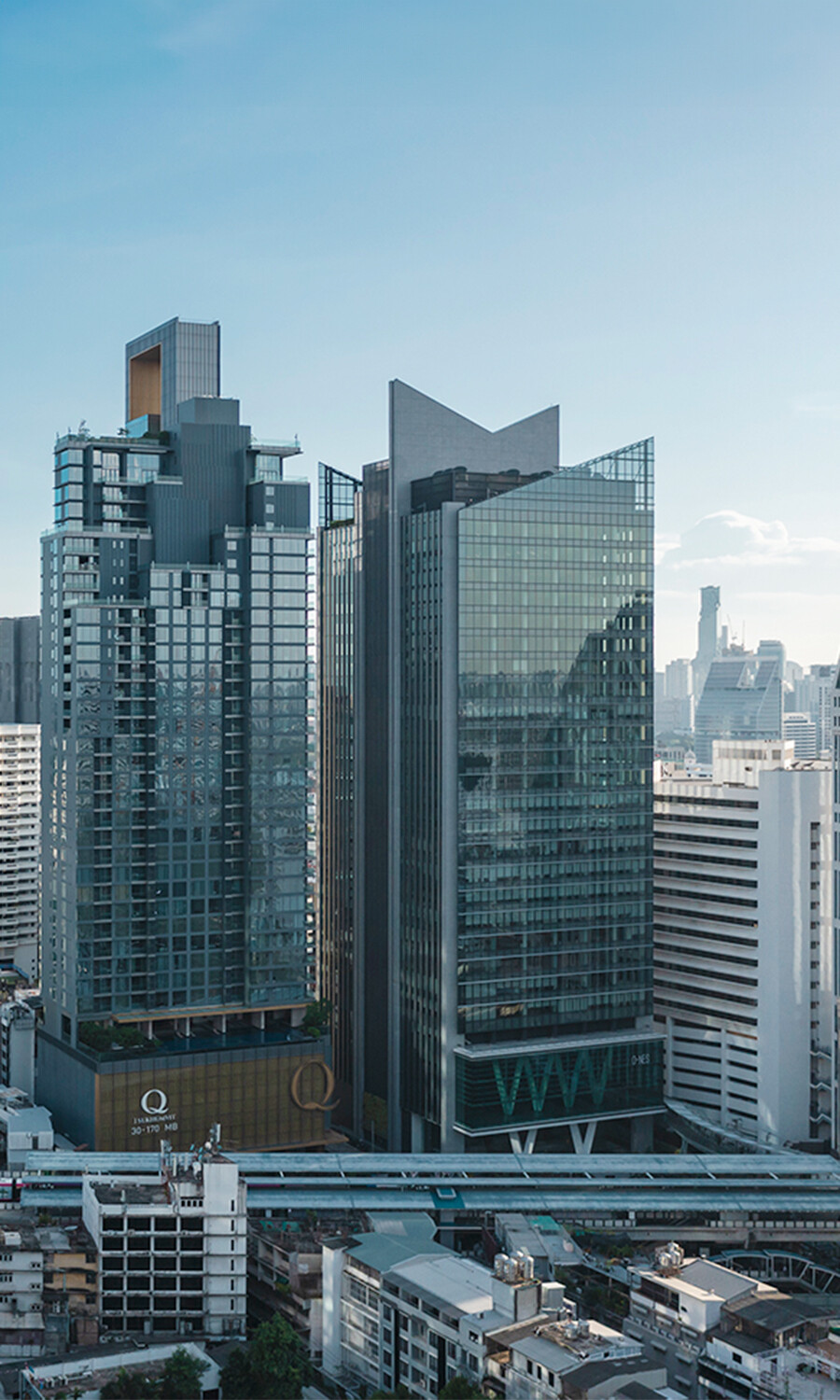

A High-Rise Embodying Obayashi Group's Craftsmanship in Bangkok, Thailand
Located in central Bangkok, Thailand's capital city, O-NES TOWER is a multi-tenant, large-scale office building with direct access to the adjacent Bangkok Mass Transit System (BTS) station. In this in-house development, Thai Obayashi Corporation Ltd., a member of the Obayashi Group, carried out everything from land acquisition through planning, design, and construction in collaboration with Obayashi Corporation.
To ensure the earthquake resistance of this high-rise with 29 above-ground floors and five basement levels, a steel-frame hybrid structure was employed for the first time in Thailand, incorporating the new national seismic design standard (*1) ahead of its enforcement. In addition, with occupant wellness in mind, the tower has been equipped with a range of state‑of‑the‑art building management systems.
O-NES stands for Obayashi New Environmental Space. As the name implies, O-NES TOWER features many firsts in Thailand, providing Bangkok with new public and office spaces.
- *1 From the start of construction in 2019, the building incorporated Thailand's new seismic design standard prior to its implementation in September 2021.
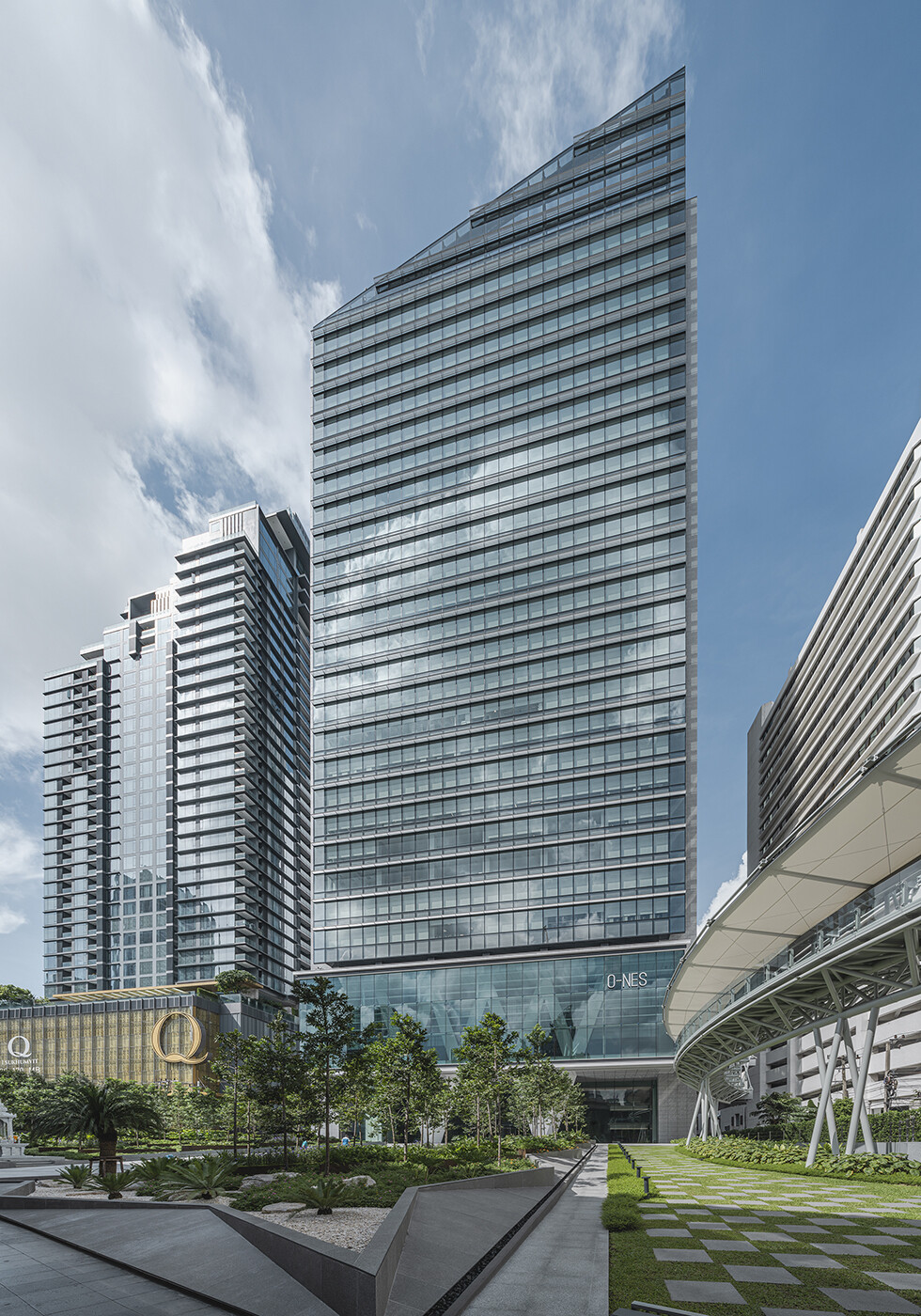
Connected to the City
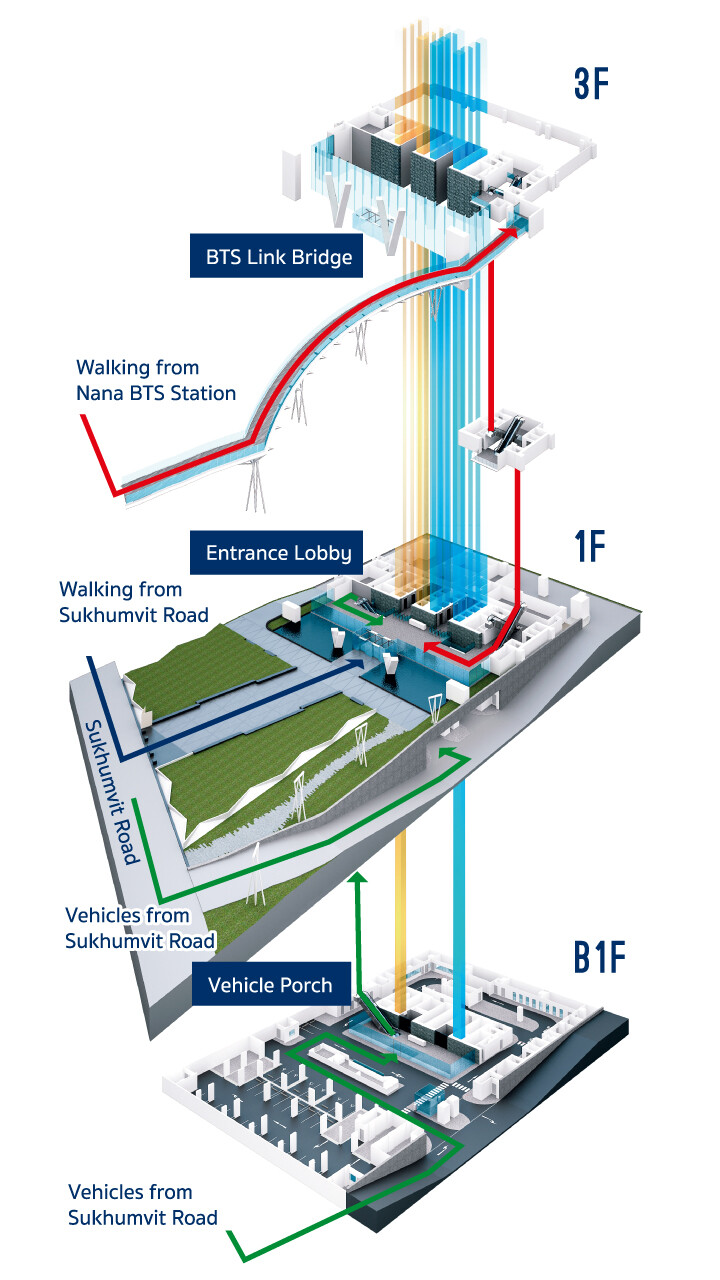
Traffic congestion is frequent in Bangkok, where many people commute by car. In designing O-NES TOWER, a major focus was on the separation of cars and pedestrians. The tower was structured so that car users, pedestrians, and BTS users each have their own route into the tower from the city. The underground vehicle porch ensures user safety and makes room for exterior greenery, creating a rich and relaxing atmosphere.
-
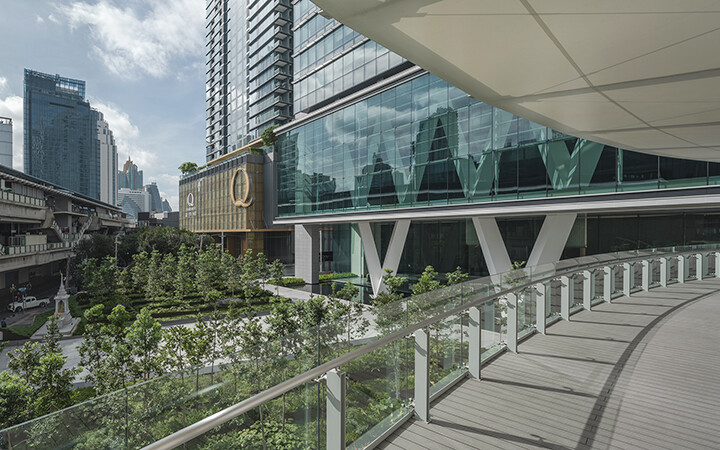
Third floor: BTS link bridge
O-NES TOWER offers direct access from Nana BTS station via the dedicated link bridge. -
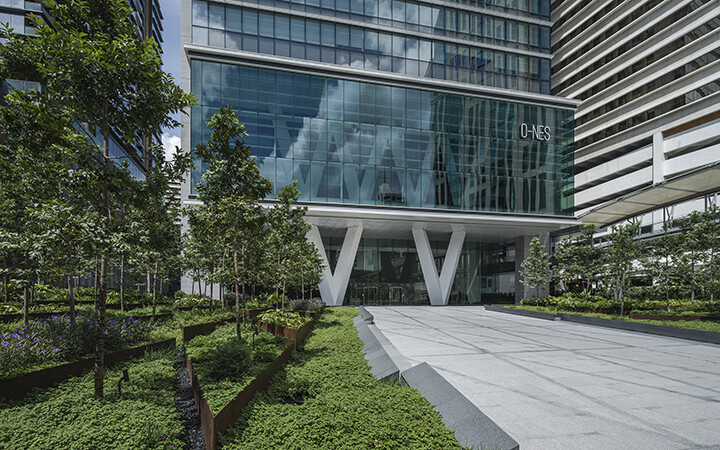
First floor: Pedestrian walkway
Pass through the rich greenery of the front garden as you approach the entrance. -
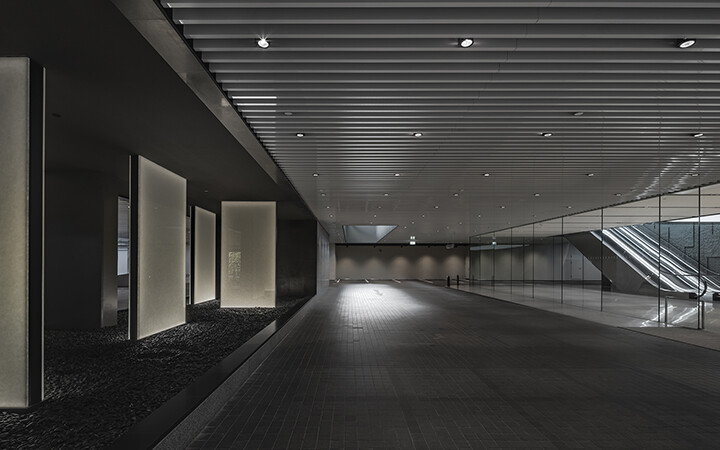
Basement 1 (B1): Vehicle porch
With pedestrians using the first-floor entrance, the underground vehicle porch prevents pedestrian-vehicle accidents and also shelters people getting in or out of vehicles from rain and sun.
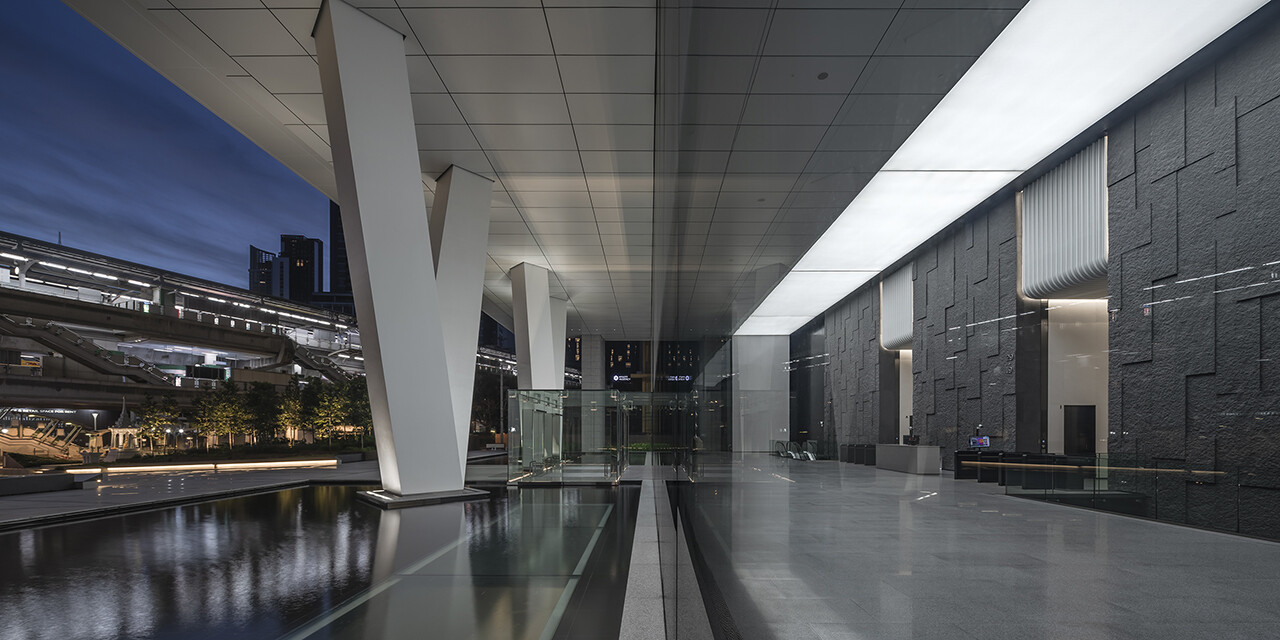
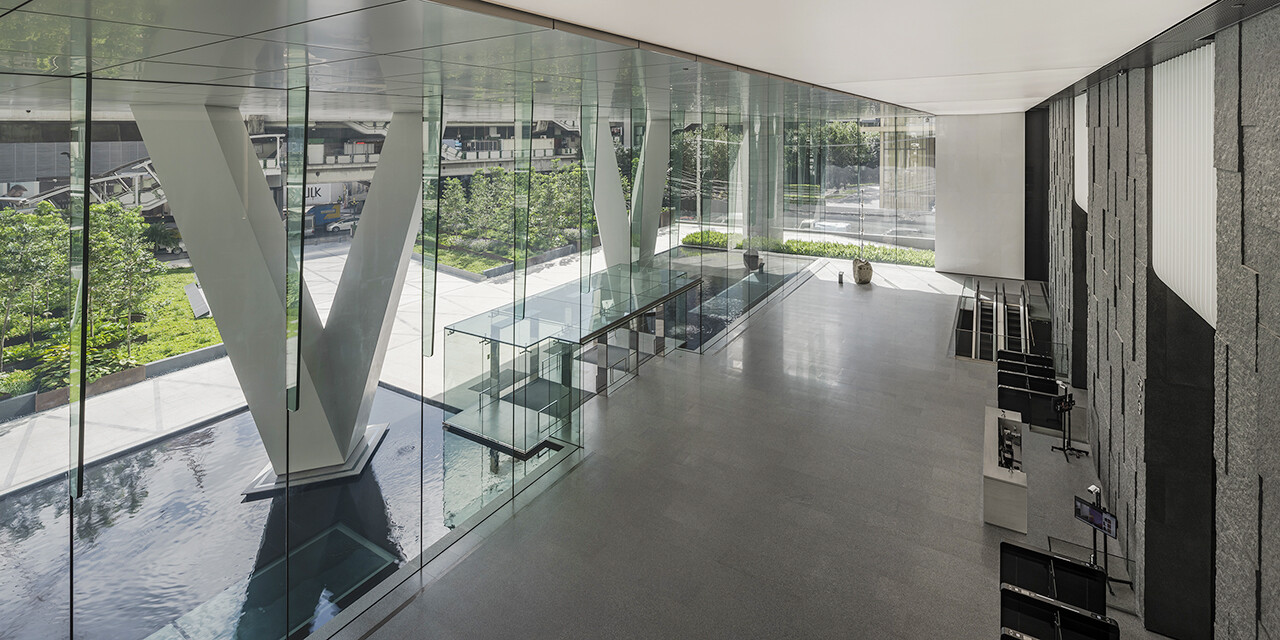
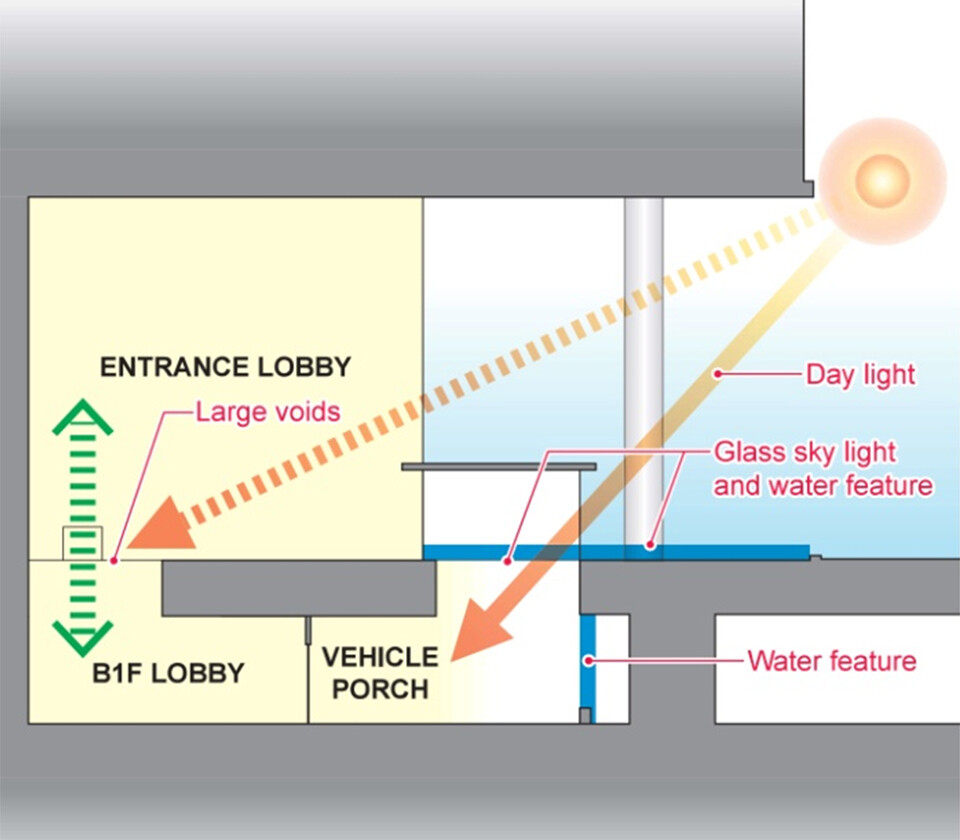
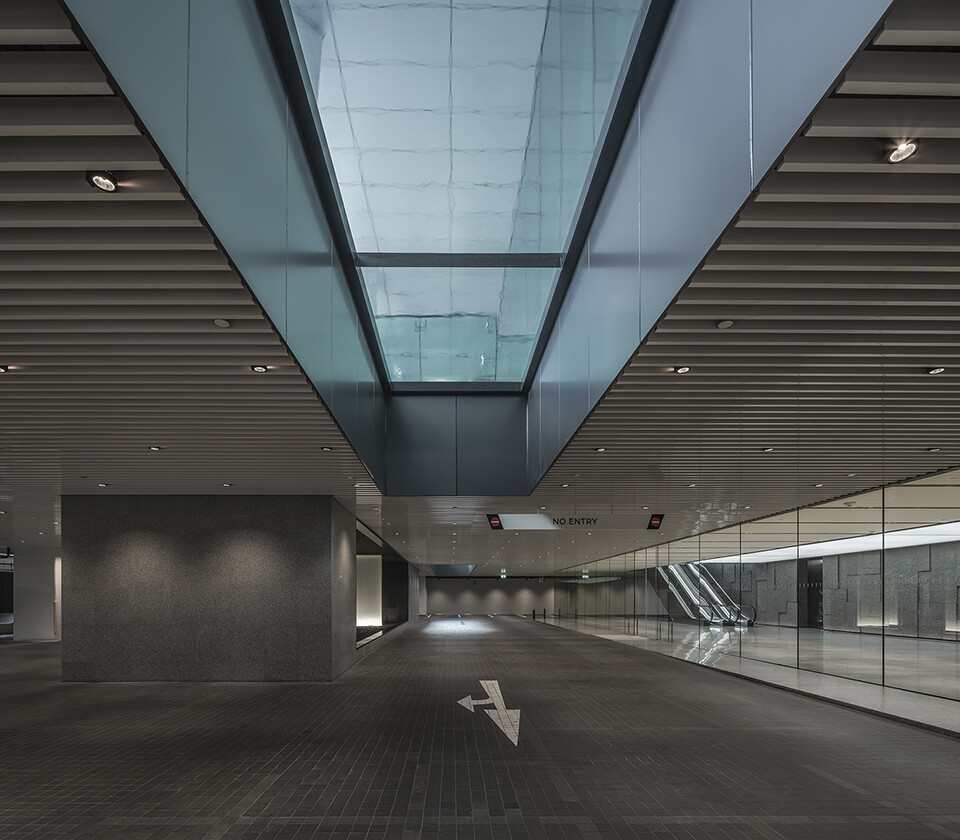
Natural light streams through the facade glass and water feature on the first floor down to the lobby and vehicle porch on Basement 1 (B1).
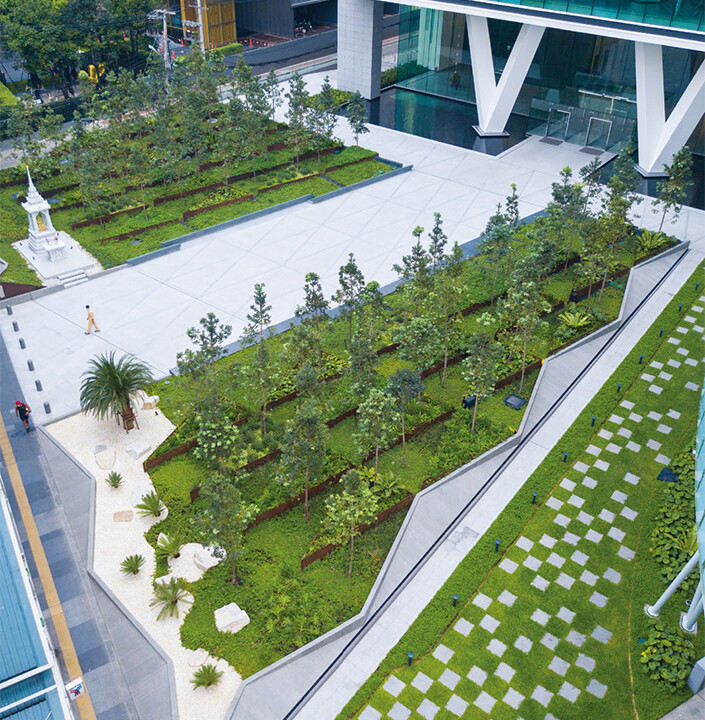
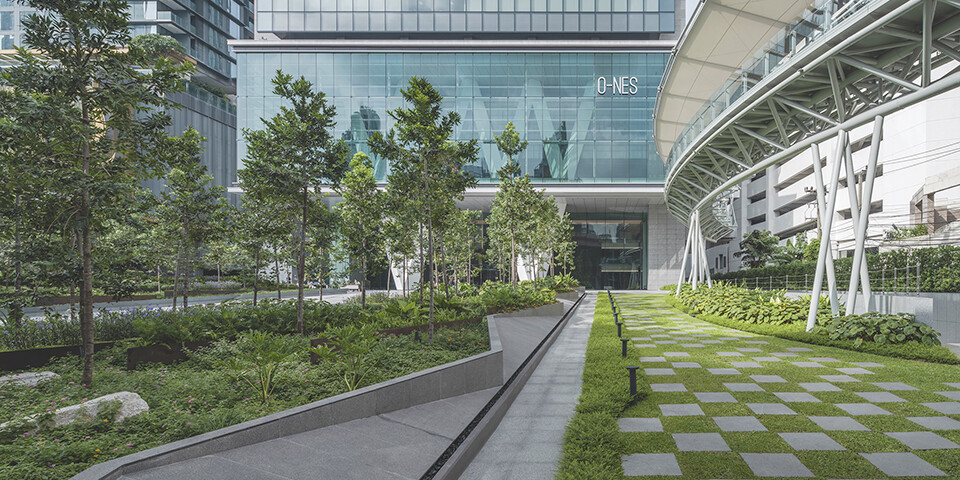
Contemporary artist Hiroshi Sugimoto and architect Tomoyuki Sakakida provided design supervision for the front garden, an urban oasis open to the public.
Pushing the Boundaries of Steel Frames
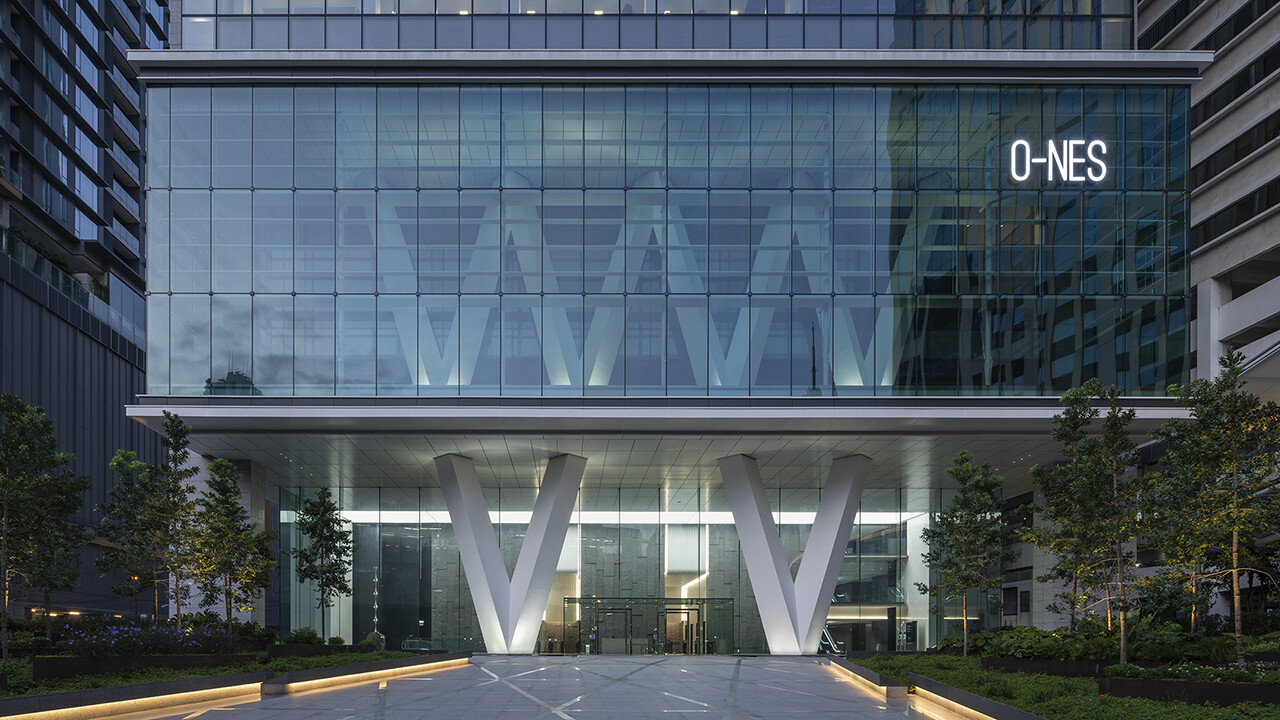
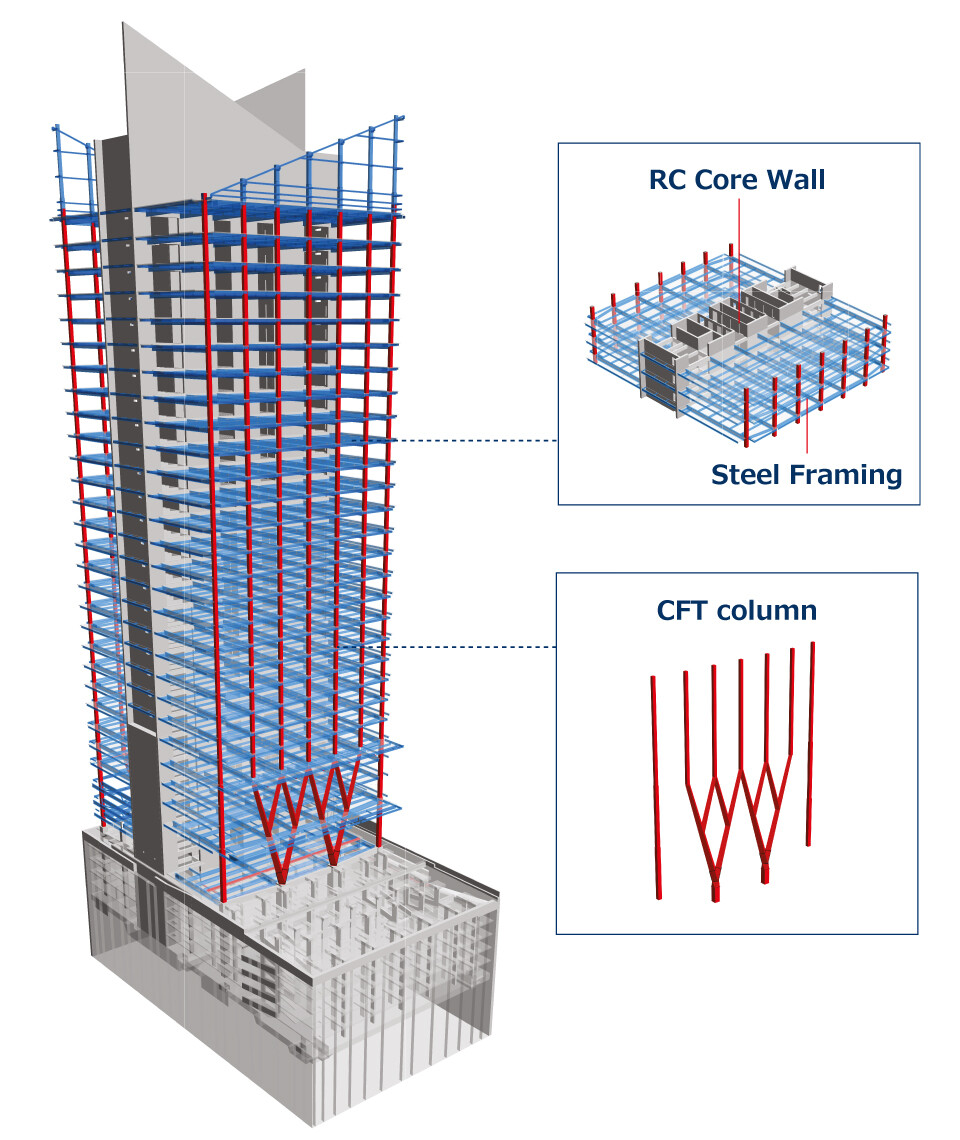
O-NES TOWER has a hybrid structure, with reinforced concrete (RC) core walls at the core and concrete filled steel tube (CFT) columns at the perimeter.
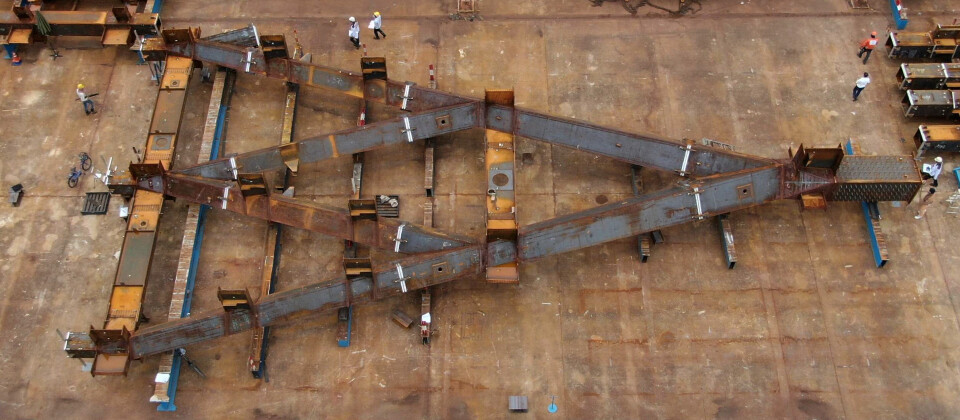
From the seventh floor down to the first floor, paired CFT columns incline to meet in a V shape that conveys impressive power when viewed from the ground up. They also create a gate-like entrance.
-
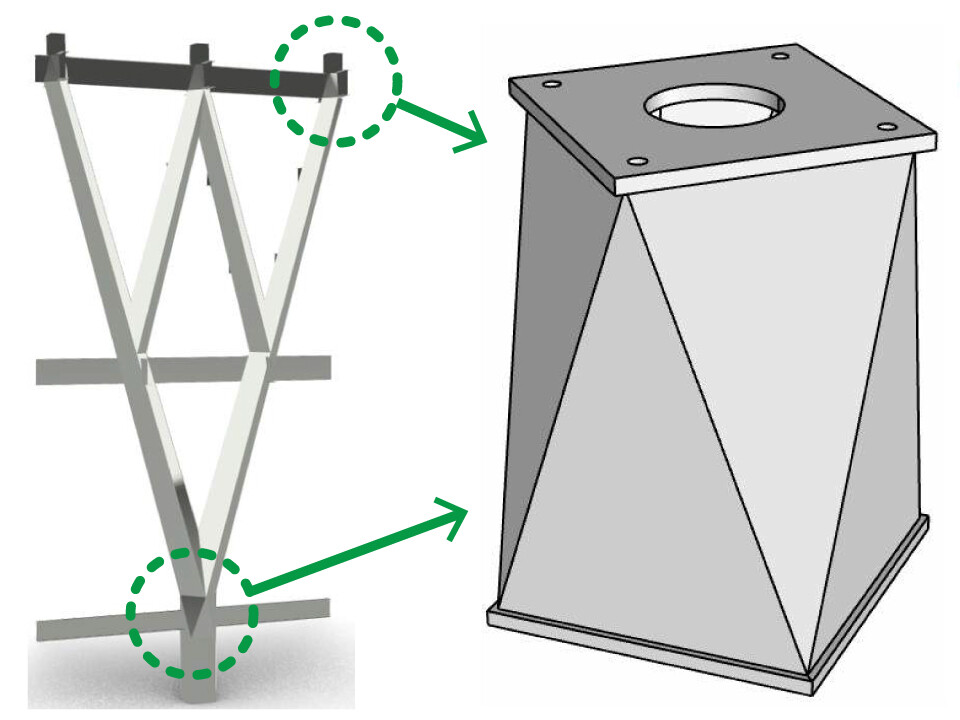
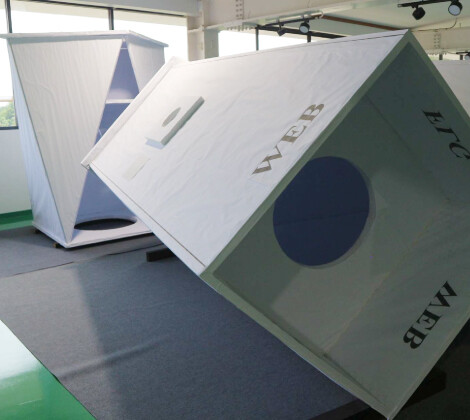
The columns are twisted 45 degrees between Basement 1 and the first floor and between the seventh and eighth floors, requiring adjustments at the column junctions. -
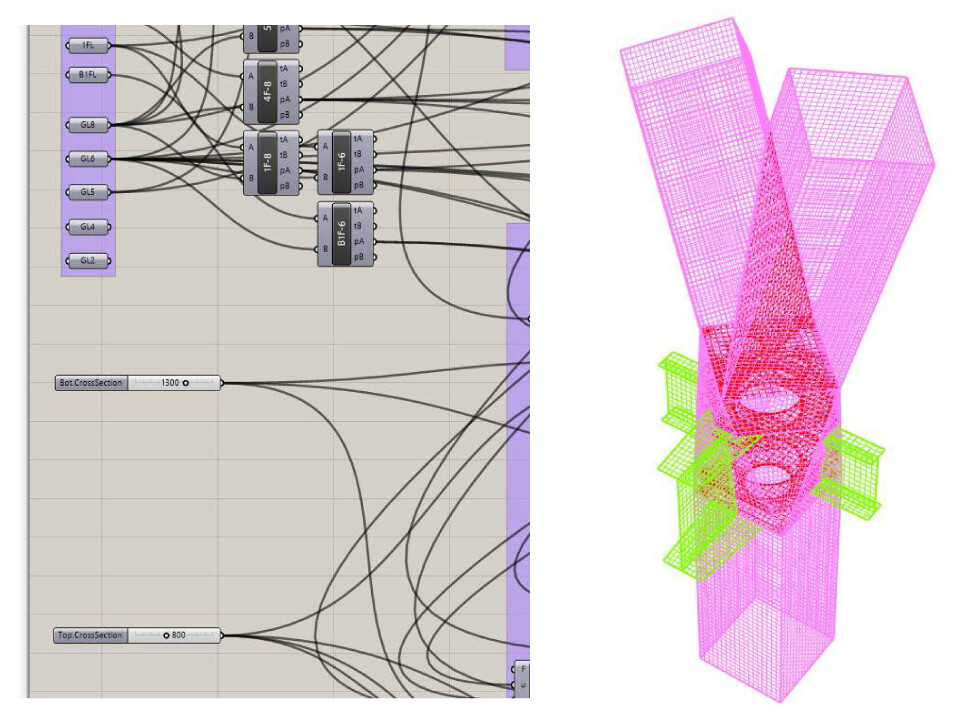
The complex shape of the joints was analyzed using parametric modeling (*2).
- *2 Parametric modeling: A technique for the creation and modification of three-dimensional models simply by entering parameters (e.g., dimensions)
Wellness‑Focused, People‑Friendly Offices
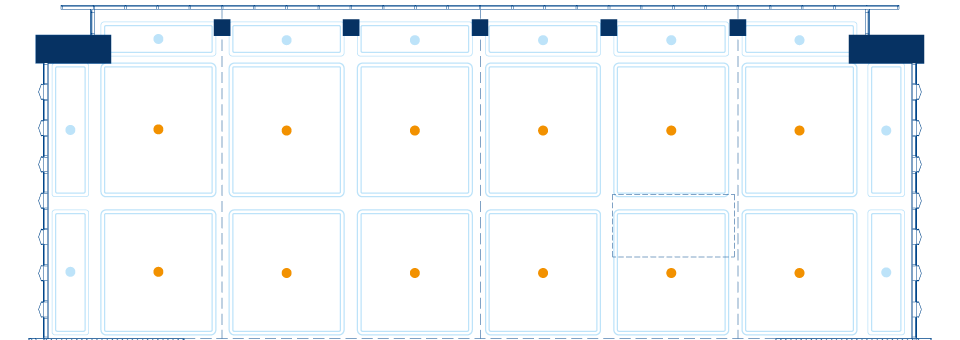
●Human sensor ●Daylight sensor
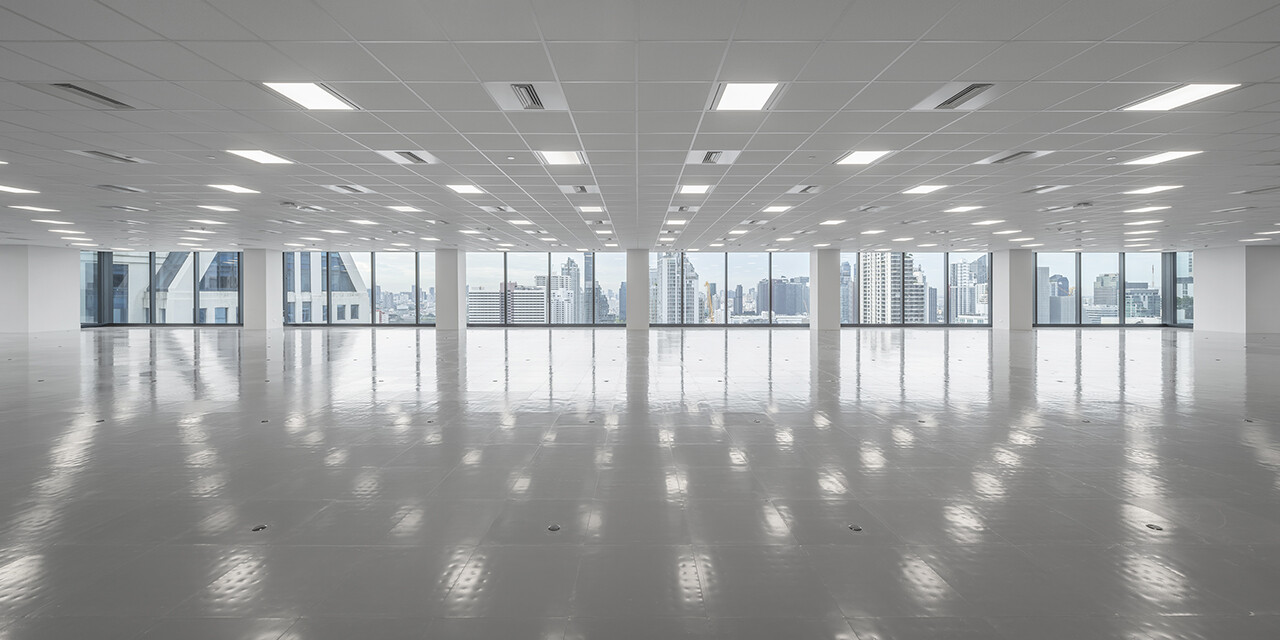
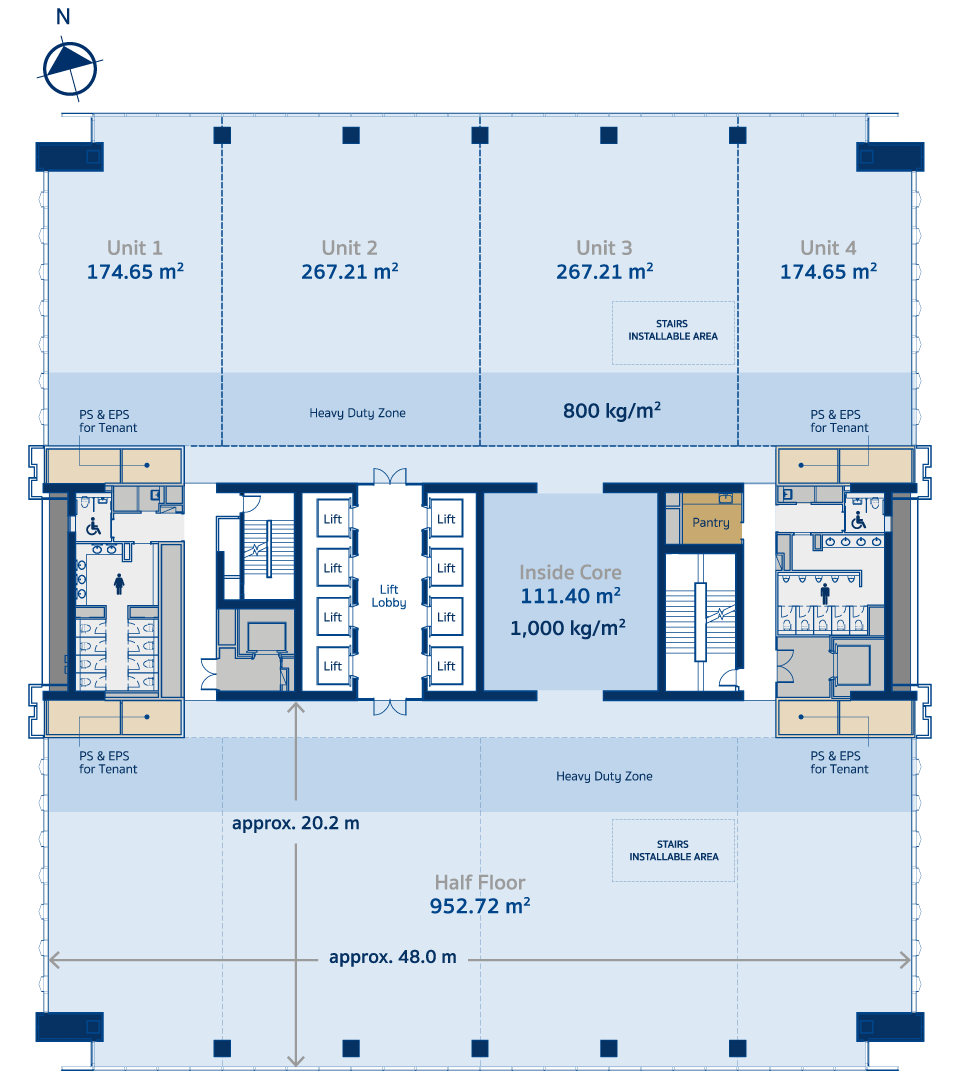
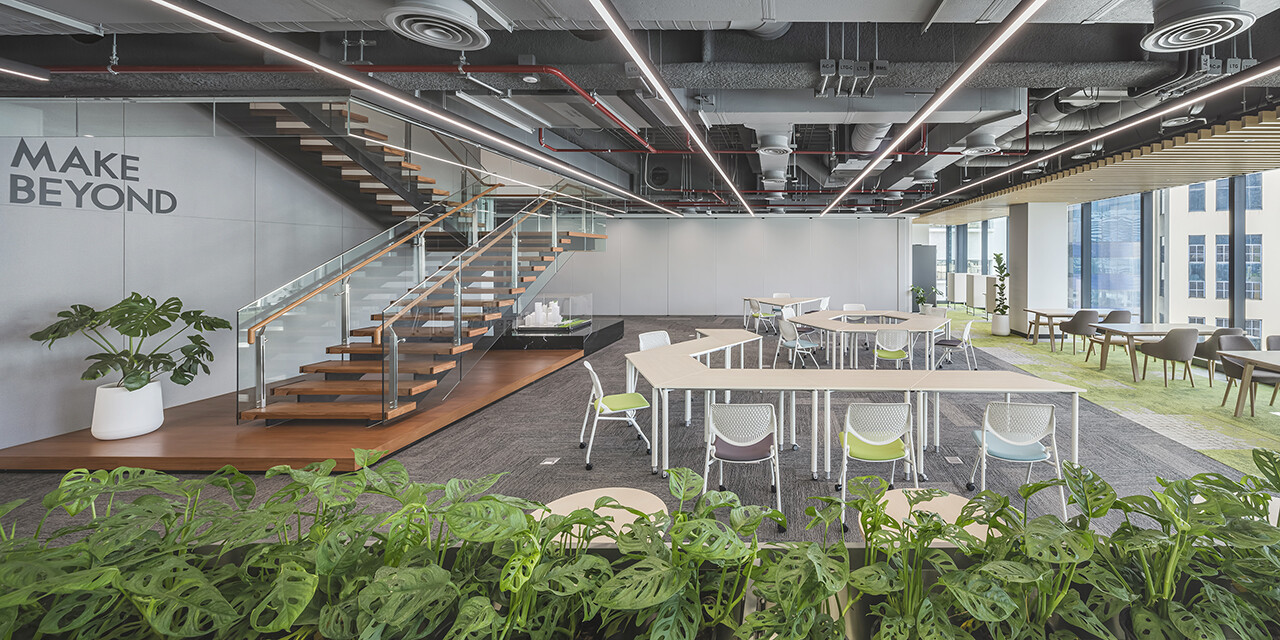
Each office features a clear span of over 20 m, providing a large column-free space with a near-square floor plate. The tower's steel-frame structure eliminates the need for columns to support the wide span, enabling flexible layouts. This is the first of its kind in Bangkok, which had not previously seen steel-frame high-rise construction.
The air-conditioning system is also rare in Thailand in that it offers independent, zone‑by‑zone control. Via smartphones or PCs, users can adjust temperature and make other settings by zone. In addition, the motion sensors installed to control air conditioning and lighting contribute to energy savings for the entire tower.
O-NES TOWER has received Gold certifications under two international certification systems: WELL Certification, which assesses facilities and spaces from the perspectives of user health and well-being, and LEED Certification, which comprehensively evaluates initiatives to reduce energy use and environmental impact in facilities.
Leveraging Digital Tools to the Fullest
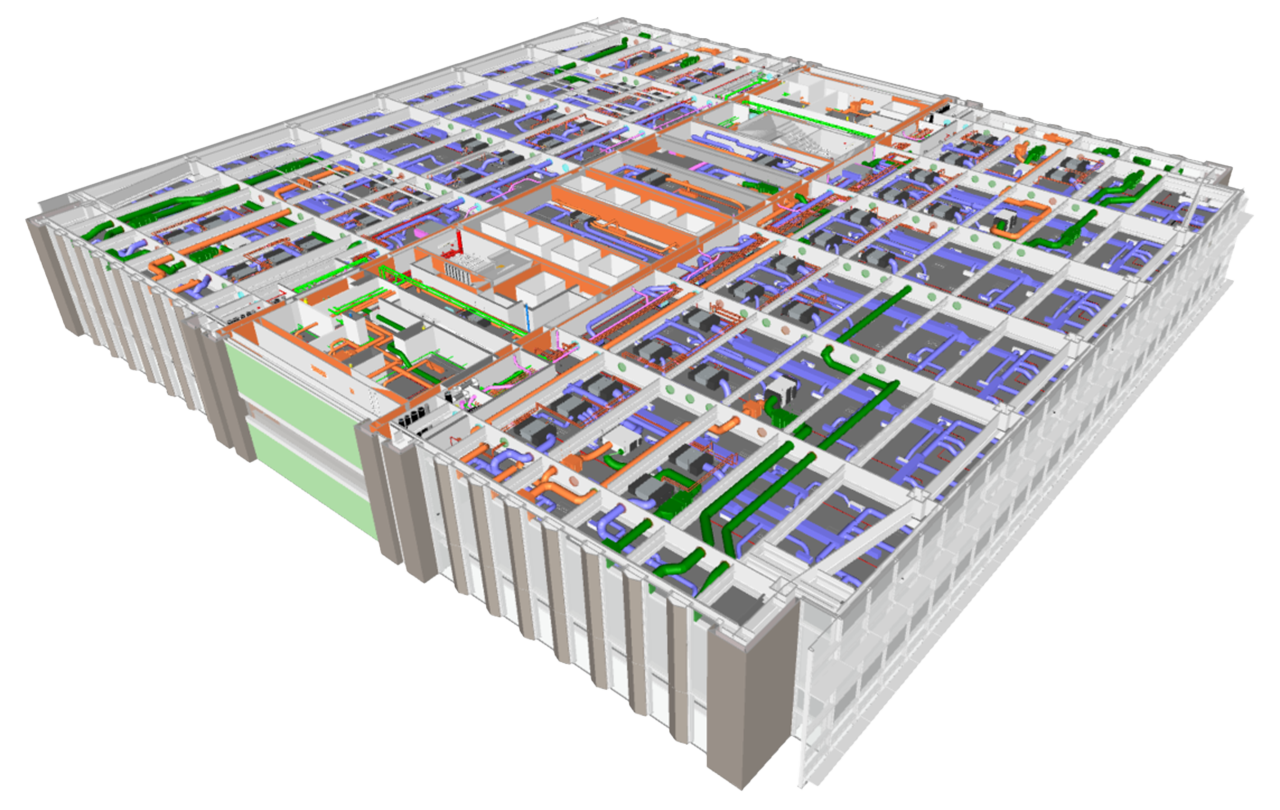
Building Information Modeling (BIM) was used extensively from the design through construction of O-NES TOWER. The project was rare in Thailand in that BIM was used even for site-level adjustments and the creation of working drawings.
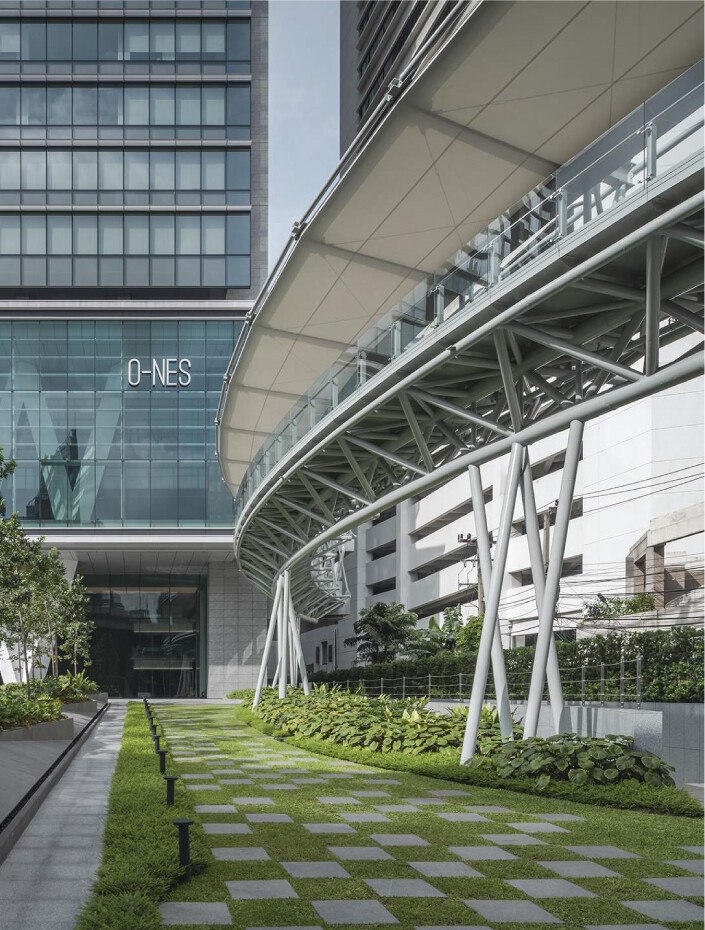
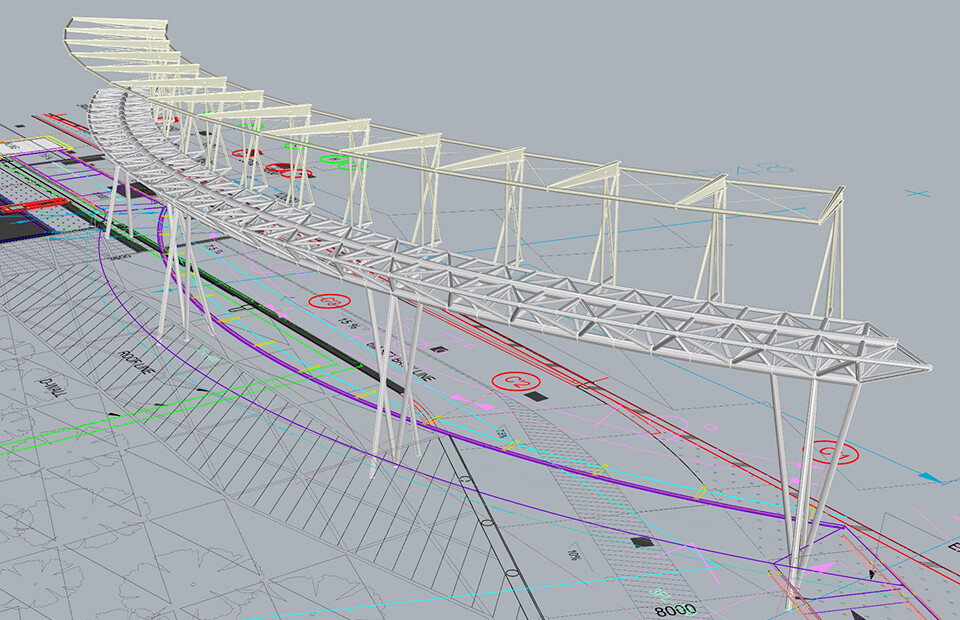
The bridge connecting the tower with the BTS station was designed using parametric modeling as well as 3D modeling software. After considering several hundred different shapes, an optimized, gently curved arch was selected. A spatial truss structure constructed of lightweight pipes provides both an open view of the front garden and structural stability.
Diverse Spaces That are at One with the City
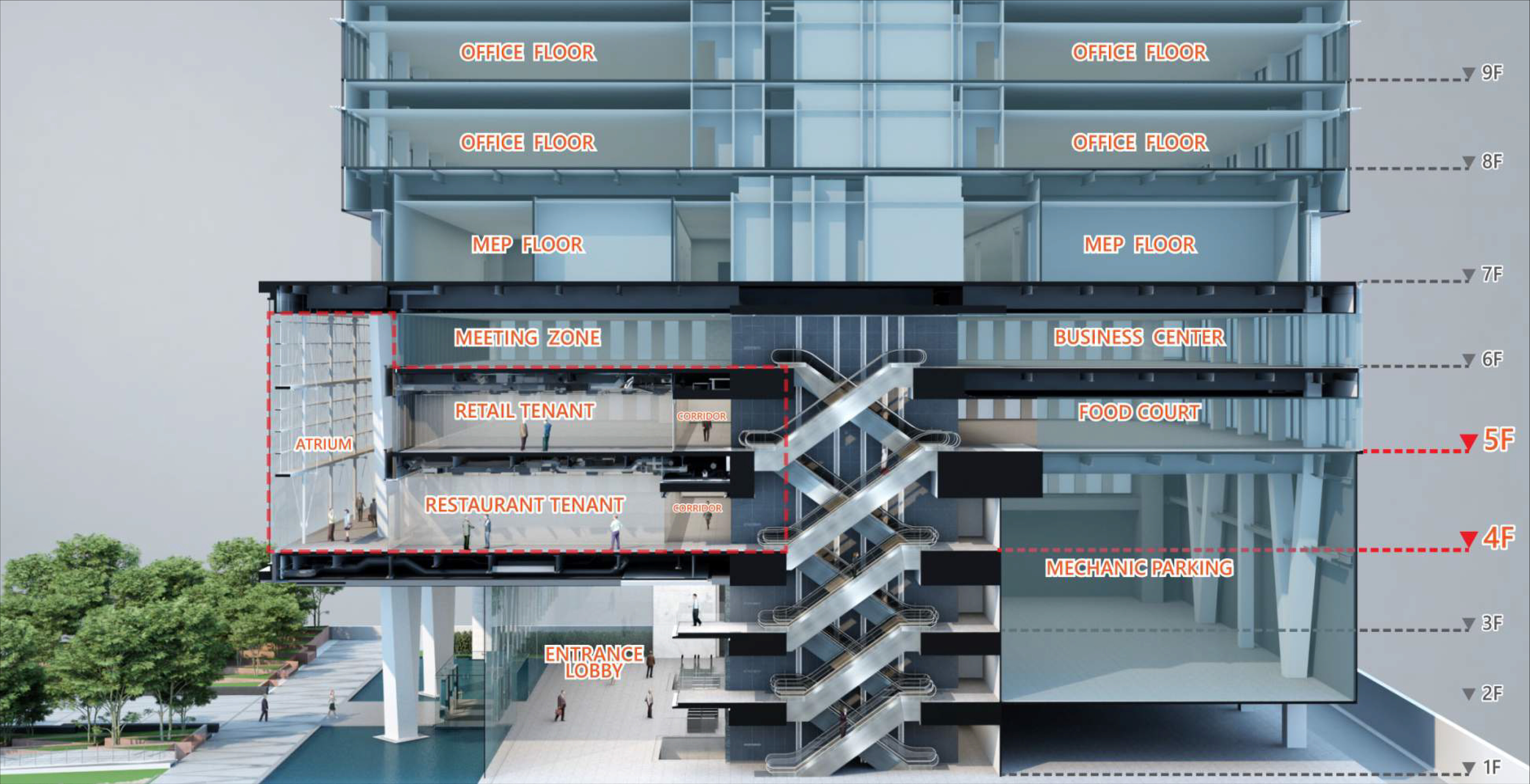
The lower floors of O-NES TOWER offer various functions, with spaces including an atrium, a tenant area, a business center, and a food court. The roof garden, with a view of the Chao Phraya River, enhances the engagement of the tower's office workers.
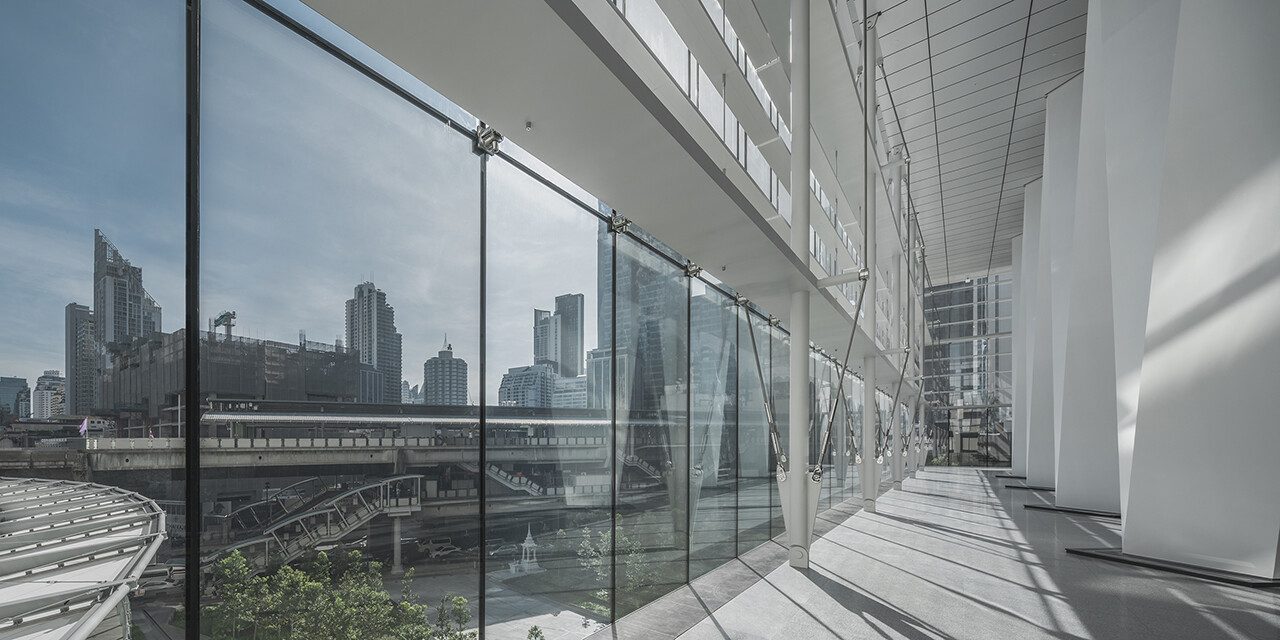
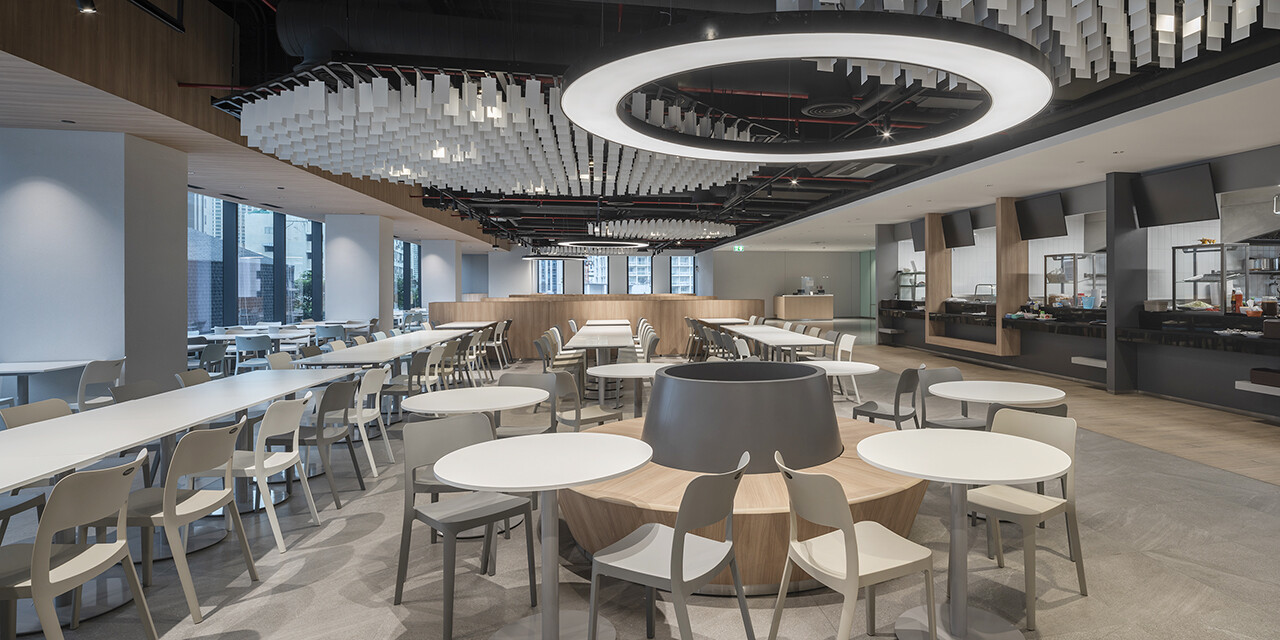
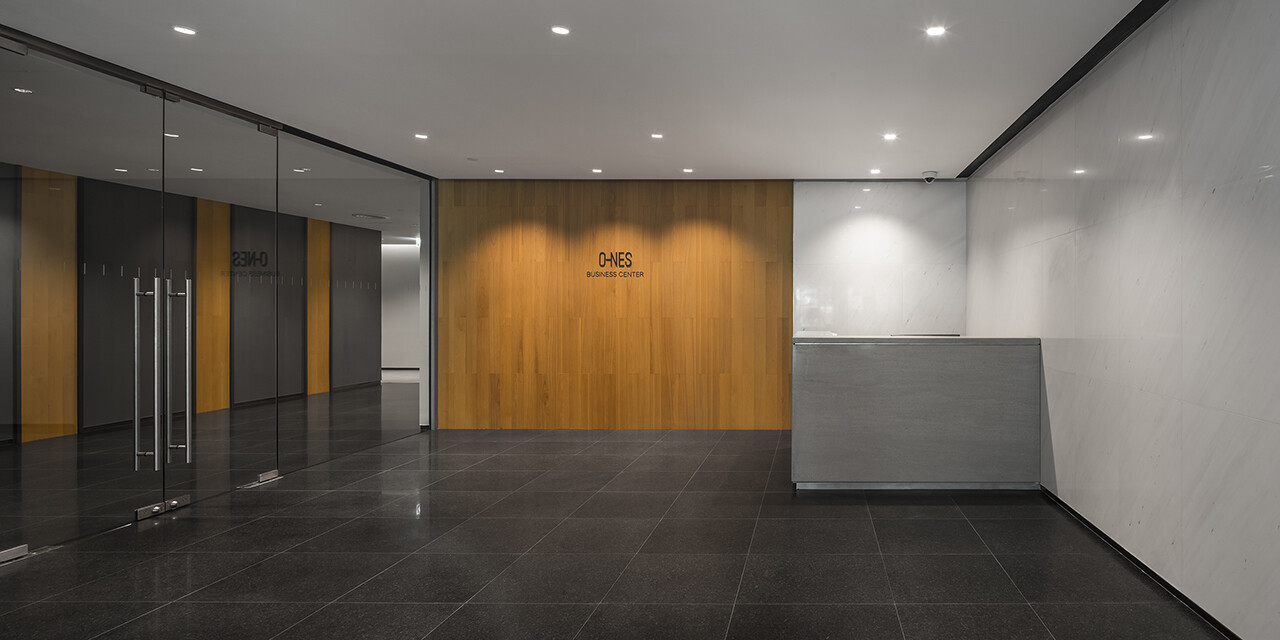
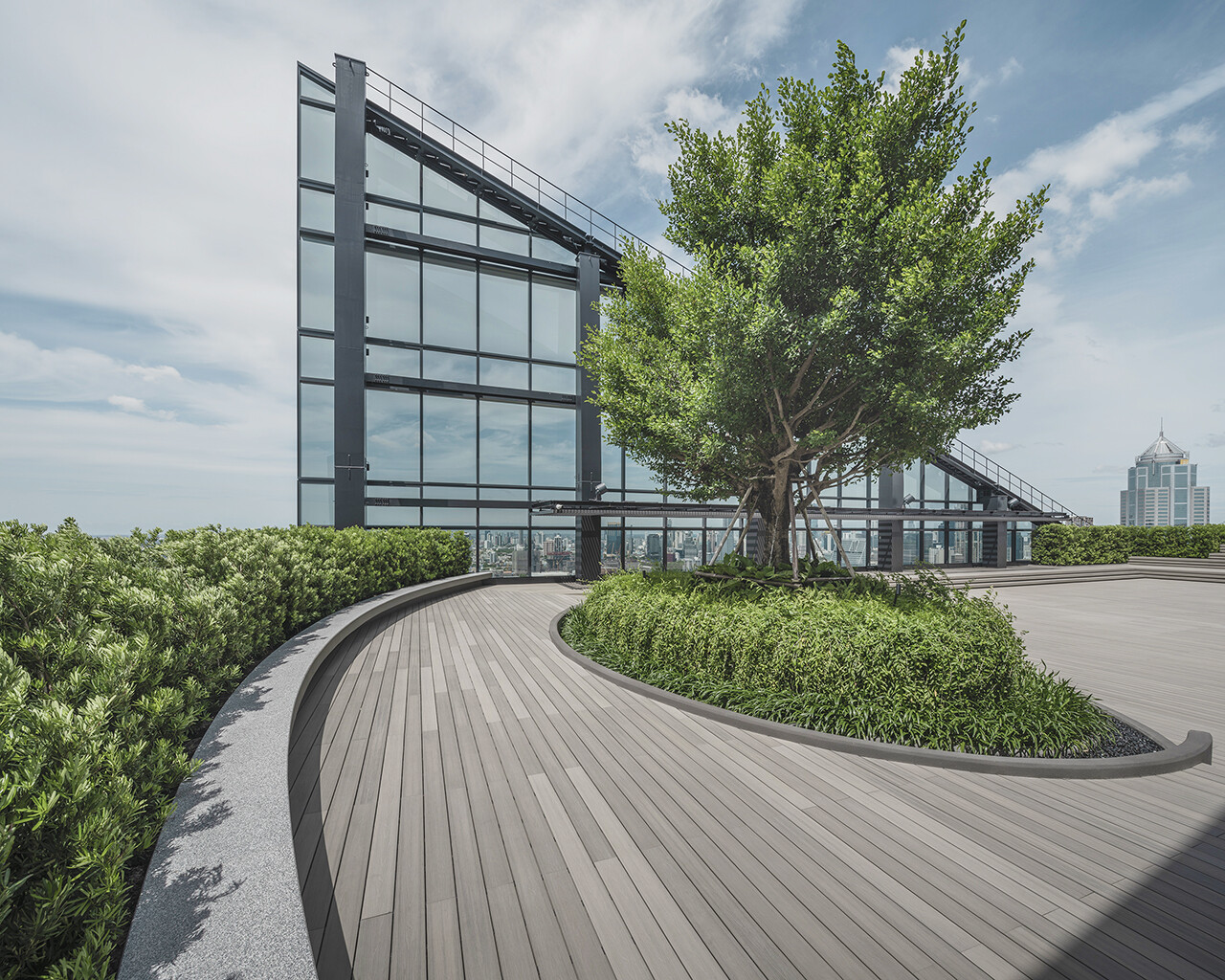
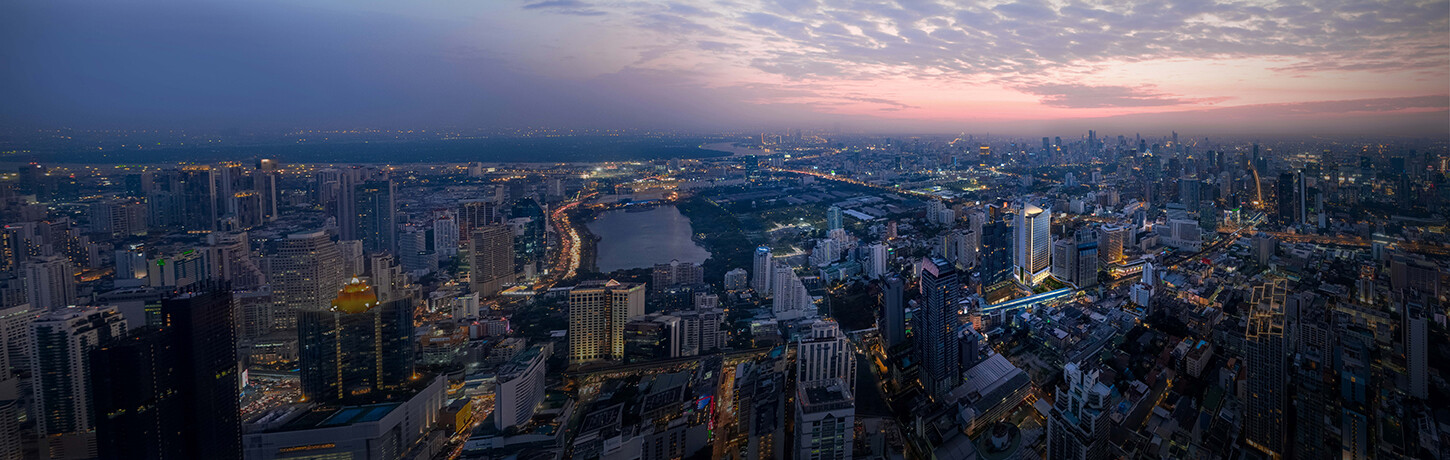
O-NES TOWER will thrive with the city as part of the cityscape, watching over the future of Bangkok for many years to come.
Note: This page reflects information as of December 2025.